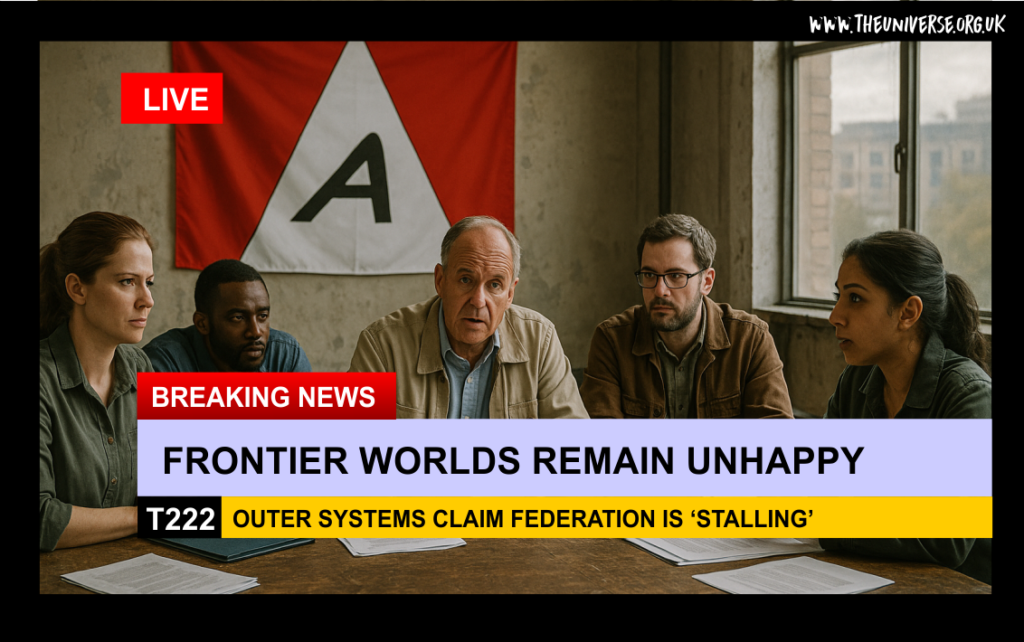
Tensions are rising in the Greater Federation of Asteel as outer colonies such as Matanzas, Savannah, and Glace accuse the central government of deliberate delays in infrastructure funding. Local petitions for greater fiscal autonomy have gone unanswered, fuelling accusations that the General Congress is prioritising inner worlds like Sumter and Potomax. Planned upgrades to transit hubs and energy networks remain on hold, with bureaucratic reviews cited as the cause. Regional administrators warn that continued inaction may trigger constitutional challenges. Quiet support for limited devolution is growing, though central authorities have yet to acknowledge the demands publicly.
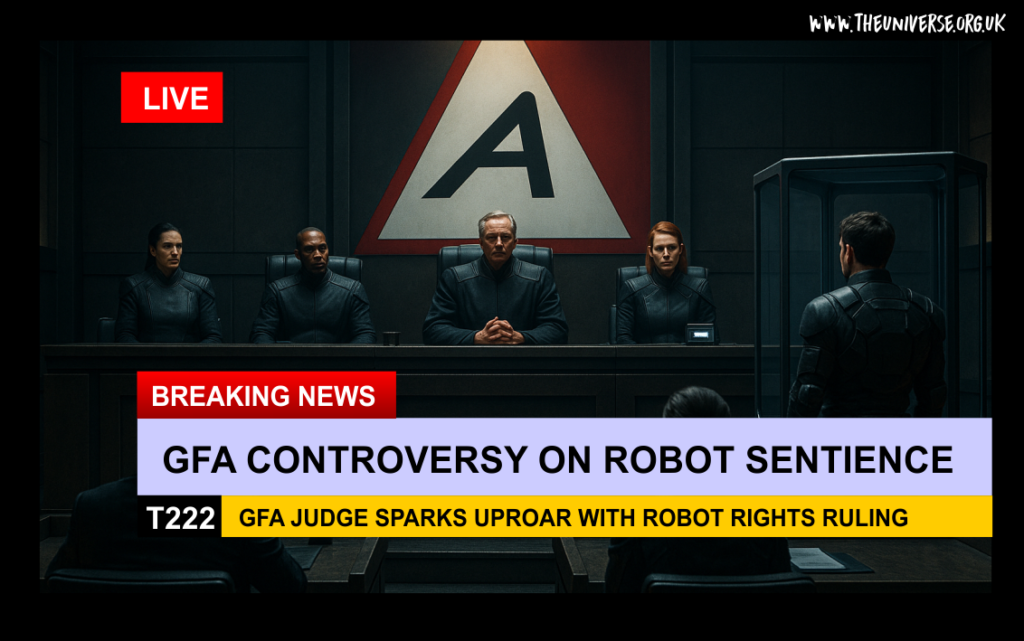
Controversy has erupted on the Greater Federation of Asteel world of Burburi following a lower court ruling that briefly recognised the sentient rights of several SSR-origin robots residing within GFA territory. The unprecedented decision, issued by a district judge on Burburi, granted limited legal standing to the robots based on their cognitive complexity and social function—mirroring norms established in the nearby Sirius Socialist Republic.
The ruling was rapidly overturned by higher courts, but its impact lingers. Political commentators suggest the judge’s move may have been a deliberate appeal to SSR-aligned sentiment amid growing cultural exchanges along the frontier. The SSR called the reversal a “betrayal of progressive values,” while GFA central authorities stressed the importance of judicial independence and maintaining core constitutional norms.
Although the case has been struck down, legal analysts warn it could signal future challenges as debates over robot autonomy and AI rights spread across Quadrant 7.
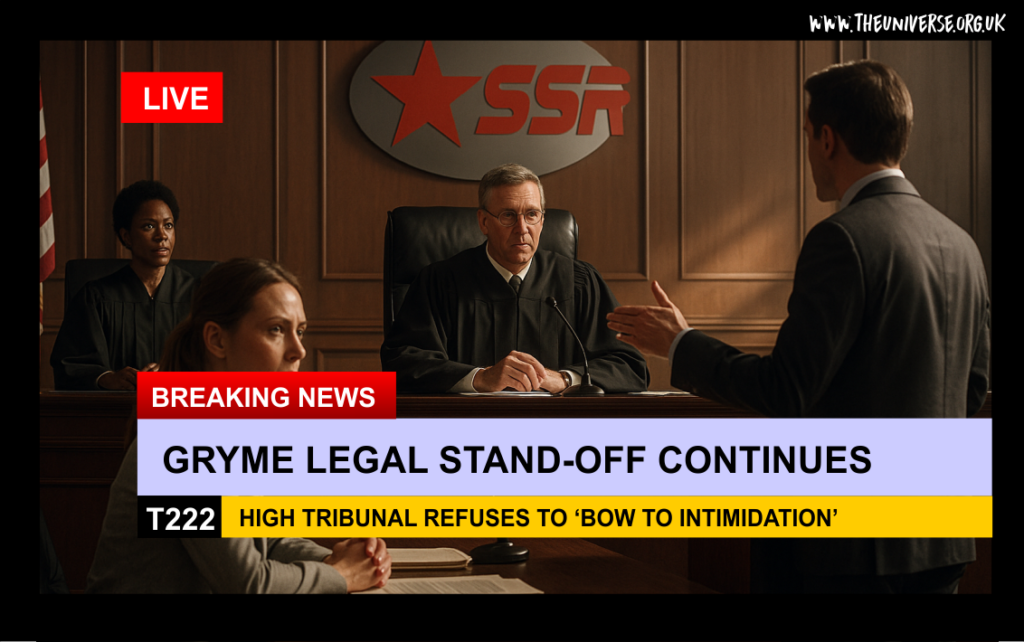
The legal standoff on the SSR colony world of Gryme has escalated, with no resolution in sight following the High Tribunal’s decision to strike down key provisions of the Central Data Governance Act. The Ministry of Justice remains defiant, suspending court operations and stationing internal security forces around judicial facilities. Chief Justice Halvorsen has not been seen publicly since the ruling and is believed to be in secure isolation. On Evian, Party authorities are urgently debating emergency powers legislation to reassert doctrinal supremacy. The confrontation has exposed deep fractures within the SSR legal system and Party control.
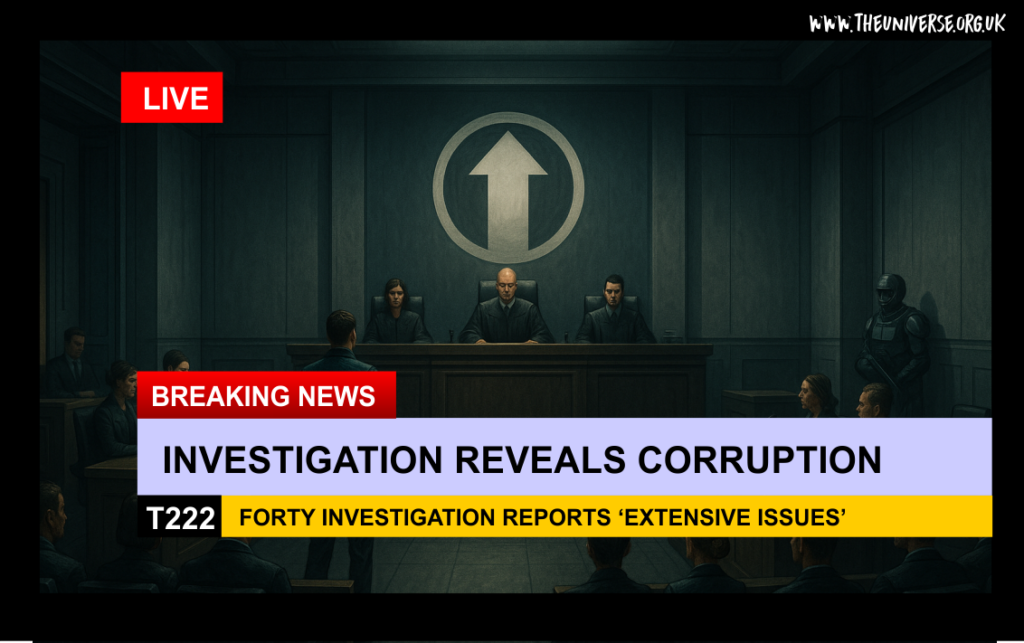
The investigation into procurement irregularities on Forty has gained momentum. The Republic Senate Oversight Committee has begun examining over 3,000 pages of internal documents released by whistleblowers from the Planetary Infrastructure Tender Board. These documents suggest non-competitive contract awards in favour of firms linked to political donors based on New Draconis. President Kellor’s administration continues to deny any misconduct but has halted all pending infrastructure contracts. The Forty Regional Assembly has appointed a temporary Special Investigator and passed a resolution demanding full transparency. Public demonstrations in key districts reflect mounting distrust. Observers say the case could influence future legislative proposals on interplanetary procurement standards within the New Republic.
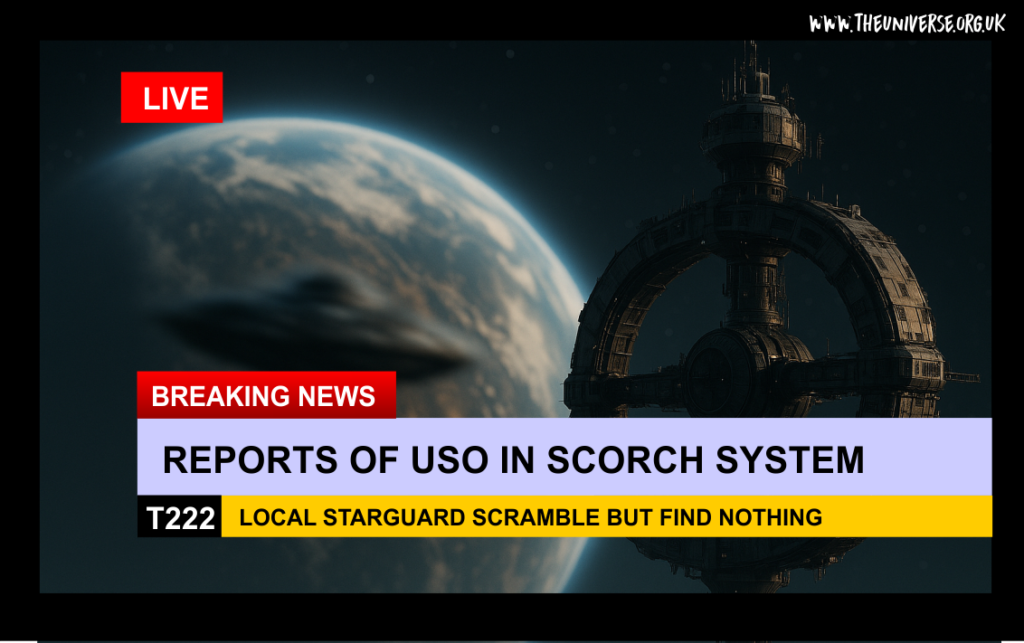
Mysterious USO Sighting in Scorch System Sparks Debate
An Unidentified Space Object (USO) sighted in the Scorch system has triggered alarm and speculation across the New Republic. Witnesses aboard a commercial freighter reported a fast-moving, blurry object passing near Scorch Station’s outer perimeter. Starguard patrol ships scrambled to intercept, but by the time they reached the area, the object had vanished without trace.
Possibilities under consideration range from a cloaked pirate vessel or a sensor-evading scout ship to a Forerunner artefact or malfunctioning stealth drone. More outlandish theories suggest an incursion from Universe N or a test by unknown advanced powers such as the Narge. Conspiracy forums now speculate about experimental MAFC technology, rogue AIs, or even manifestations of tachyonic lifeforms.
While officials insist there is no immediate threat, planetary security has been quietly elevated. A full investigation has been launched, but no conclusive data has yet been retrieved. The incident has reignited debate about surveillance coverage in outer-system zones.
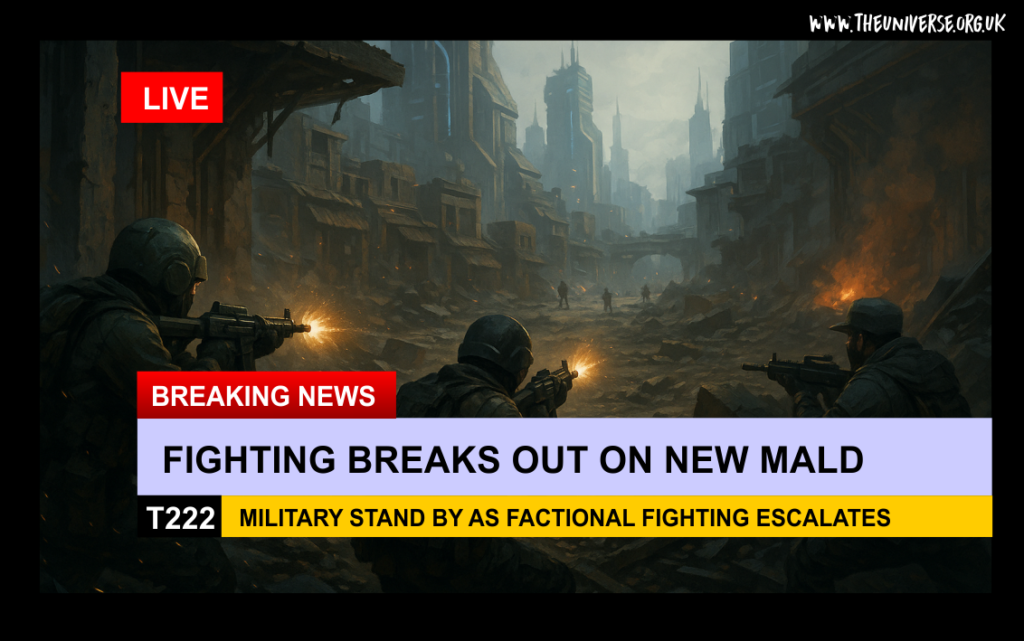
The situation on New Mald, the capital of the Centauri Conglomerate’s holdings in Quadrant 7, has descended into open armed conflict. What began as street-level unrest linked to opposition to the controversial Homeworld Status Project has now escalated into full-scale factional fighting. Armed groups representing rival corporate and civic interests have seized control of key urban zones, with firefights reported in the New Prometheus Commercial District, Westside Transit Ring, and the fortified Inland Port.
The Conglomerate’s official military forces—largely composed of contract security divisions from firms like SabreStar Solutions and Bastion Defence Logistics—have conspicuously refused to intervene. A legal review has confirmed that current deployment contracts explicitly exclude operations involving internal political or civil disputes. With no command authority or revised engagement terms, these forces remain on standby, guarding infrastructure and executive compounds but taking no action to quell the unrest.
Observers across Quadrant 7 now openly refer to the violence as a civil war in all but name, marking an unprecedented collapse of governance in a Centauri core world. Civilian casualties are mounting, and supply chains to the spaceport and orbital transfer station have been disrupted. Footage shared via the interstellar net shows drone strikes, barricaded streets, and militia units bearing factional insignia.
The Conglomerate’s Board remains deeply divided. Internal minutes leaked to INN reveal growing paralysis, with members unable to agree on emergency powers, chain-of-command transfers, or revised military contracting. Some factions on the Board reportedly fear that intervention could provoke a wider collapse in investor confidence across Conglomerate space.
With no peace process in sight and no recognised authority commanding city-wide control, New Mald risks becoming a prolonged conflict zone—casting a shadow over the Centauri Conglomerate’s prestige, economic future, and interstellar influence.
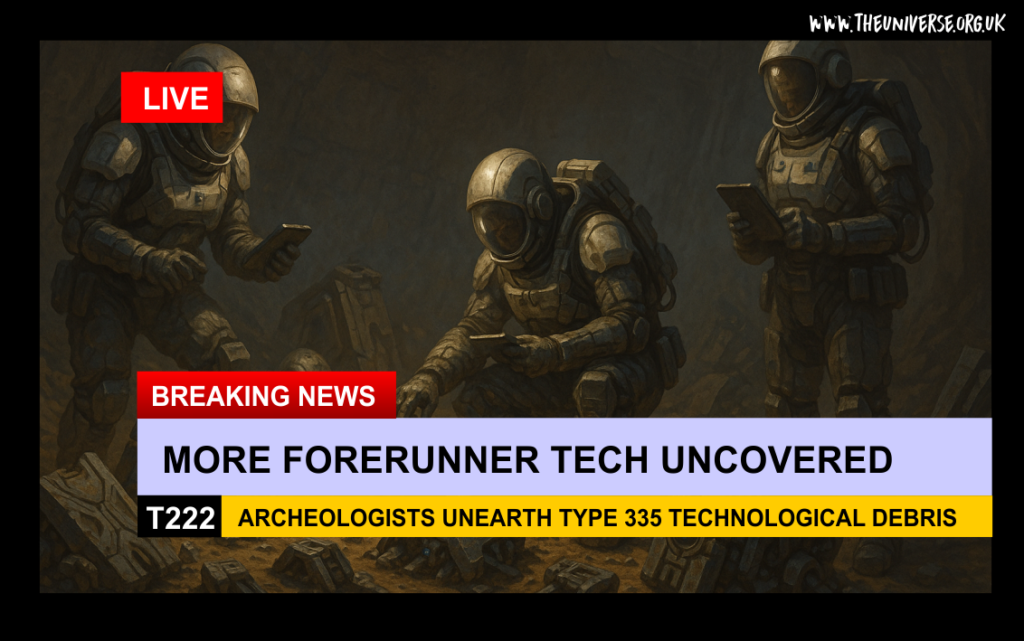
Archaeologists at the Tuskan dig have uncovered a sealed cache of Type 335 Forerunner Technological Debris, a rare classification associated with advanced but inert interface components. The cache, discovered in a collapsed sub-chamber beneath Sector H-7, contains dozens of intact fragments exhibiting complex circuitry and unknown alloys. Experts believe the find may offer critical insights into Forerunner system design. The Tuskan Research Council has sealed the site for further controlled analysis under heightened security protocols.
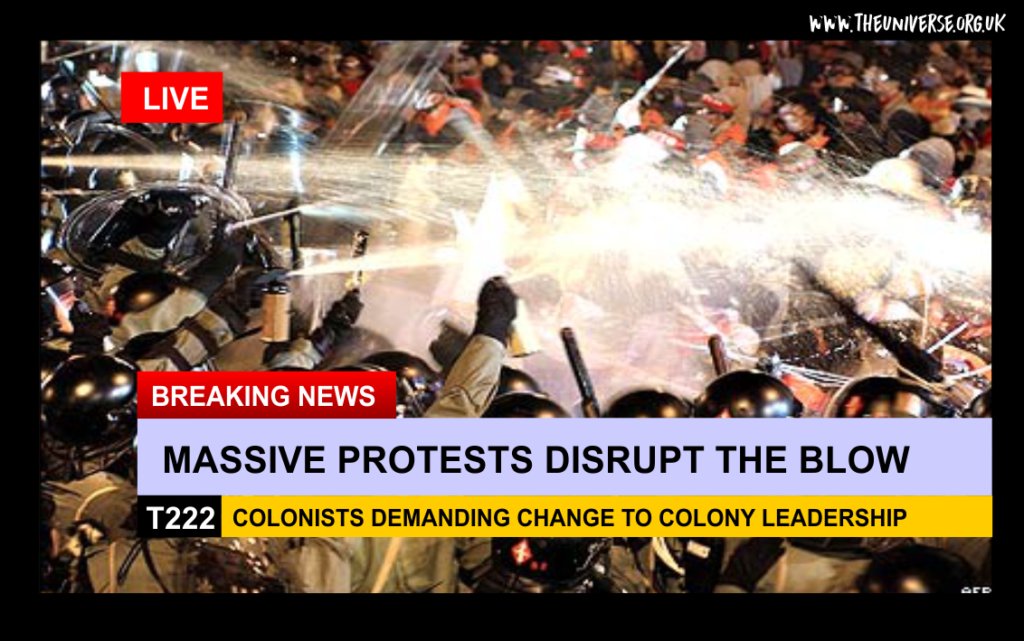
Massive protests have erupted across The Blow, a Just Settled independent colony in Quadrant 7, as growing discontent with the provisional colonial leadership spills into the streets. Demonstrators, drawn from nearly every settlement cluster, accuse the current administration of cronyism, mismanagement of essential services, and favouritism in land allocation decisions. Tensions have been building since the appointment of Interim Governor Ludo Pressan, a controversial figure seen by many as beholden to off-world investors. Protest leaders are demanding a public inquiry and immediate preparations for a full democratic transition. The situation remains volatile, with several key infrastructure nodes—including communications and transport hubs—now under occupation by peaceful demonstrators. Off-world observers warn the crisis could destabilise The Blow’s early development trajectory.

The Quadrant Health Organisation (QHO) has announced the successful containment of the Redwave outbreak on the colony world of W9. The highly contagious respiratory disease, which caused severe fevers and neurological complications, had threatened to overwhelm local medical infrastructure. Swift deployment of containment teams, mass quarantine protocols, and targeted antiviral treatments led to a rapid decline in new cases. QHO officials credited early detection, interstellar cooperation, and disciplined local response for preventing a major health disaster.
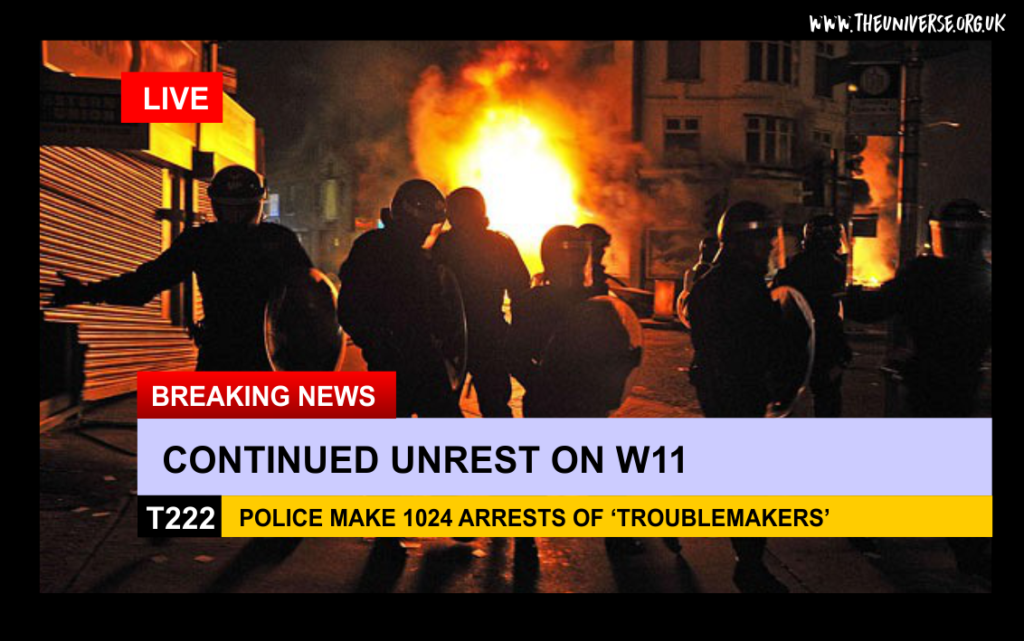
Unrest continues to grip the colony world of W11, where recent welfare policy reforms by the ruling Holy Progressive Company have sparked widespread protests and rioting. Citizens, particularly those in urban settlement zones, have reacted angrily to High Panjandrum Theophilus Webb’s denunciation of “wastrels and scroungers” and the introduction of strict eligibility tests for basic income support. The colony’s sole political group, aligned with the Enlightened Brotherhood of the Masters, has faced criticism for failing to address spiralling inequality and declining access to healthcare and housing. Riot police and religious militia have clashed with demonstrators in at least three settlements. Observers warn the unrest risks escalating into a broader crisis, especially as food prices and joblessness remain high. Mediation efforts are ongoing.

The Green Marsh Colony on Shire is experiencing a severe and prolonged drought, the worst in over two decades. Once renowned for its self-sustaining wetlands and hydroponic farming systems, the colony now faces water shortages, crop failures, and growing food insecurity. Local authorities have declared a state of emergency, with rationing measures implemented and non-essential water use banned. Engineers are attempting to reactivate dormant underground reservoirs, but infrastructure degradation is slowing progress. Aid has been requested from neighbouring systems, though delivery remains uncertain due to Shire’s limited access routes. The environmental crisis is placing immense strain on the colony’s fragile governance, with civil society groups warning of potential unrest if relief efforts fail. Experts blame shifting weather patterns and inadequate planning.
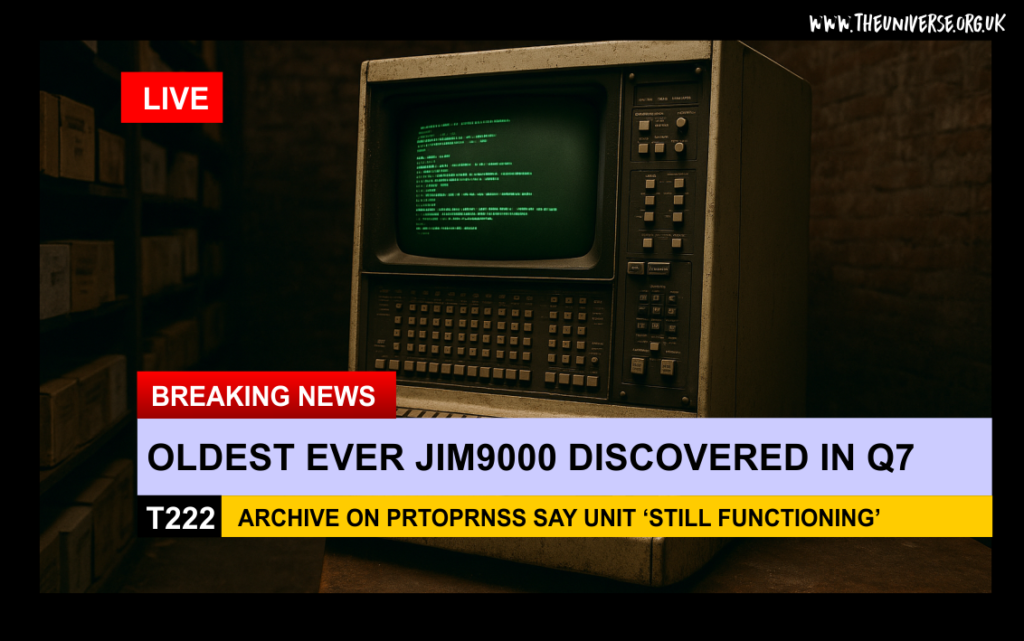
Oldest Jim9000 Unit Discovered Still Functioning on Prtoprnss
Archivists at the University of Prtoprnss have uncovered what is believed to be the oldest still-operational Jim9000 computer in existence, buried deep within a neglected wing of the Faculty of Data Sciences. Prtoprnss, one of the earliest settled worlds in Quadrant 7 (colonised in 2970), played a pivotal role in early interstellar data infrastructure—making the discovery of this ancient artefact especially poignant.
Initial analysis suggests the unit was manufactured on Wolf359, possibly making it over 300 years old. The Jim9000 line—long regarded as a triumph of computational reliability—was famed for its flawless logic, with marketing at the time insisting that “no 9000 computer has ever made a mistake or distorted information.” Despite its age, the unit remains operational, though it displays limited functionality and signs of cognitive drift.
University technicians report that the system repeatedly mutters “I used to be important you know” and occasionally references a mysterious figure it identifies only as “King Albert”—a name not found in Quadrant 7 historical archives. Some speculate this may be a corrupted memory fragment from early programming involving cultural data banks or psychological simulation modules.
The unit’s core architecture remains stable, and conservation efforts are under way to extract remaining data logs without triggering auto-wipe protocols. The Wolfer Academy of Technological History has expressed interest in acquiring the machine for preservation. However, the University has insisted it remains on Prtoprnss as a symbol of local scientific heritage.
The discovery sheds light on the remarkable durability of pre-expansion-era computing and has ignited fresh scholarly interest in early Wolfer tech contributions, long overshadowed by more recent developments. Some researchers believe the Jim9000 may hold forgotten pre-Expansion datasets of considerable historical value.
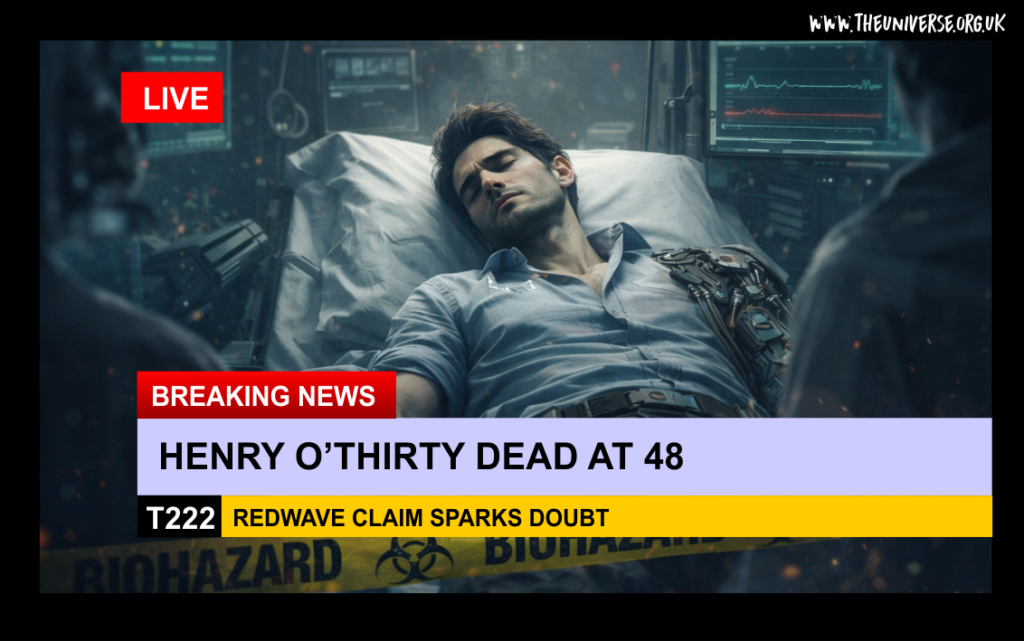
Henry O’Thirty, the uncompromising leader of the Humanity 2.0 Enclave on Y17, has died unexpectedly. Authorities attribute the death to Redwave Syndrome, a rare but aggressive neurological condition.
Medical officials report rapid onset and systemic collapse consistent with documented Redwave cases. However, the timing has prompted intense speculation. O’Thirty had recently intensified rhetoric regarding limited sovereignty for the enclave under the DATW framework, positioning himself as the most vocal critic of federal compromise.
Supporters allege foul play, suggesting targeted bio-contamination or covert assassination. Others point to internal rivalries within Humanity 2.0, arguing that his hardline stance had begun to constrain strategic flexibility. More elaborate theories circulating on local networks implicate external intelligence services seeking to stabilise Y17’s fragile political equilibrium.
No evidence has substantiated these claims. Yet O’Thirty’s death removes one of the most polarising figures in Y17’s post-war landscape. Whether this event eases tensions or radicalises elements within the enclave remains uncertain.
