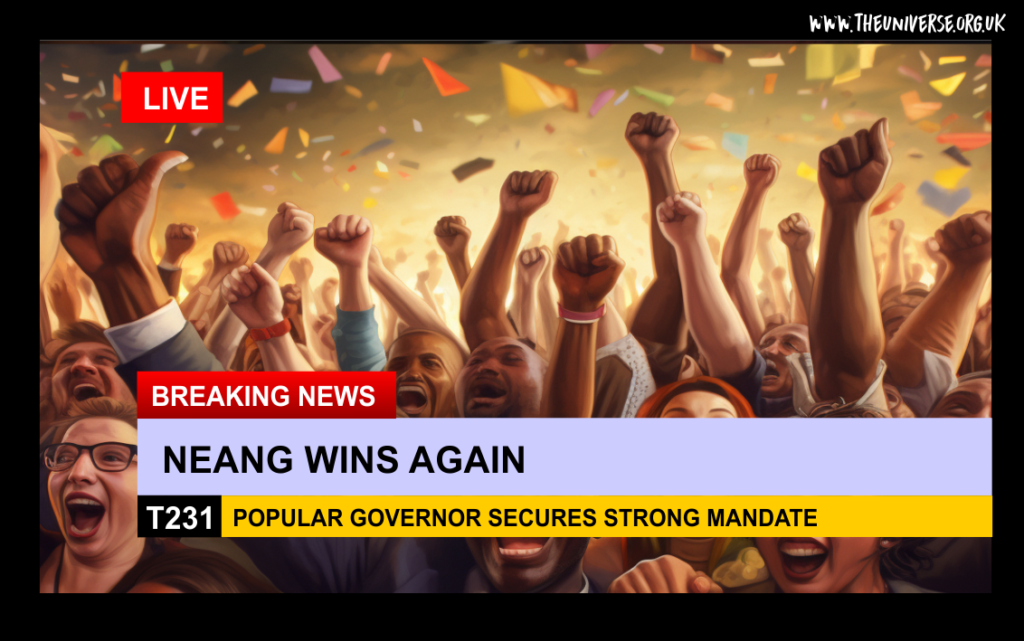
The Greater Federation of Asteel has concluded its Quadrant 7 elections with a decisive victory for incumbent Governor Tring Neang, who has secured another term following a commanding performance at the polls.
Preliminary results released by the Federation Electoral Commission indicate that Neang’s supporters achieved strong results across multiple GFA worlds, with particularly robust turnout reported on Potomax, Savannah, Mesa, and Big Greenie. Electoral officials described participation levels as “notably high,” suggesting growing public engagement with Federation governance.
Analysts note that Neang’s personal popularity has risen steadily during his time in office. His tenure as Governor has been associated with continued economic stability across the Federation’s Quadrant 7 holdings, as well as efforts to strengthen administrative coordination between colonial governments and Federation institutions. His visible role in supporting infrastructure projects and trade initiatives has also resonated with voters.
Security policy has been another factor in the campaign. The Governor has consistently supported measures to protect shipping lanes and orbital installations, while maintaining close cooperation with Federation naval forces and the Starguard. Commentators suggest that this emphasis on stability and pragmatic governance has appealed to voters amid a wider climate of political uncertainty across the quadrant.
Opposition parties have acknowledged the scale of the result, with several issuing statements congratulating Neang while signalling that they will continue pressing for greater local representation and investment in frontier systems.
Speaking in Potomax following the announcement, Neang thanked voters for their confidence, stating that his administration would continue working to ensure “prosperity, stability, and opportunity across every world of the Federation.”
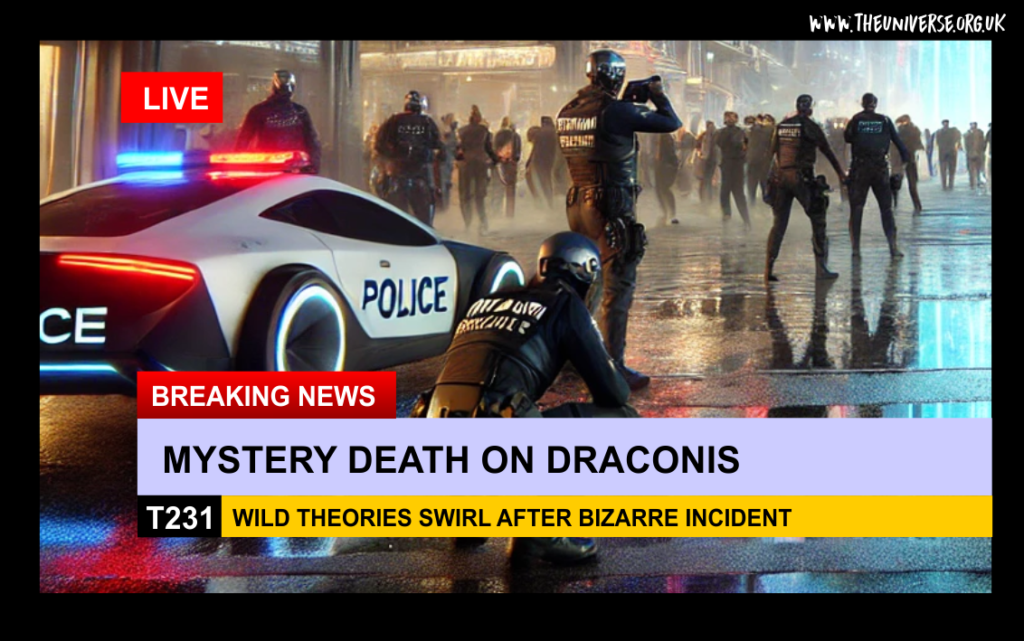
Mystery Death on Draconis
Wild theories swirl after bizarre incident
Authorities on Draconis are investigating the mysterious death of a local transhuman engineer whose final moments have sparked a storm of speculation across the New Republic.
The deceased, Dr Jalen Tor, aged 42, was discovered late last week inside his workshop in the frontier settlement of Argo Vale. According to planetary investigators, Tor was found surrounded by partially disassembled cybernetic components and diagnostic equipment. Officials have so far described the incident only as a “highly unusual mechanical-biological malfunction.”
Draconis is well known for its unusually large transhuman population, with many residents adopting cybernetic enhancements in pursuit of a philosophy that humanity and machine should evolve together.
Across human space such extensive cyborg modification remains controversial and is often linked with psychological instability or fringe political movements.
Local rumours have filled the information vacuum. Some neighbours claim Tor had recently been experimenting with experimental neural upgrades capable of “parallel cognition.” Others suggest the death may have been linked to black-market enhancement technology imported from Belter communities.
More colourful theories circulating on DraconisNet suggest everything from rogue AI fragments embedded in illegal hardware to sabotage by anti-transhuman extremists opposed to the world’s growing enhancement culture.
Planetary authorities have urged calm, stating that there is currently no evidence of foul play or broader public safety risks. However, investigators have confirmed that several of Tor’s cybernetic implants appear to have failed simultaneously in ways not normally associated with standard augmentation systems.
For now, the strange death remains unexplained—fueling yet more speculation on a world already famous for pushing the boundaries between human and machine.
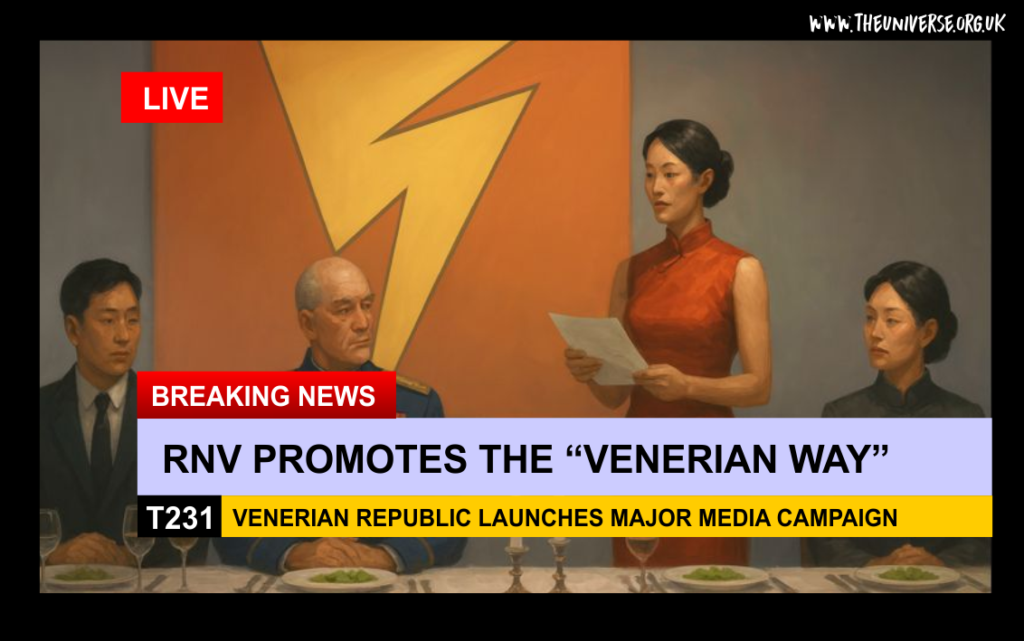
Venerian Republic Launches Major Media Campaign Promoting the “Venerian Way”
The Republic of New Venus has launched a wide-ranging communications initiative across its Quadrant 7 worlds promoting what officials describe as the “Venerian Way”—a model of governance combining central economic direction, strong public welfare systems, and active engagement in interstellar diplomacy.
The campaign, broadcast through state and private media channels alike, highlights the Republic’s record of universal healthcare, stable economic growth, and orderly civic life, presenting these achievements as the foundation of Venerian prosperity. Promotional material emphasises the concept that every citizen has a secure and valued place within society, supported by reliable public institutions and long-term economic planning.
The messaging also links domestic stability with the Republic’s growing external role. Recent humanitarian operations on New Mald, along with Venerian participation in multinational naval exercises such as EXERCISE SHINING STAR II, feature prominently in the broadcasts as examples of the Republic’s commitment to pragmatic diplomacy backed by credible military capability.
Early polling from several Venerian systems indicates the campaign is resonating strongly with domestic audiences, reinforcing public confidence in existing governance structures.
Observers note that the initiative appears designed not only for internal cohesion but also to signal to neighbouring powers that the Republic of New Venus intends to remain an influential and stabilising force in Quadrant 7.
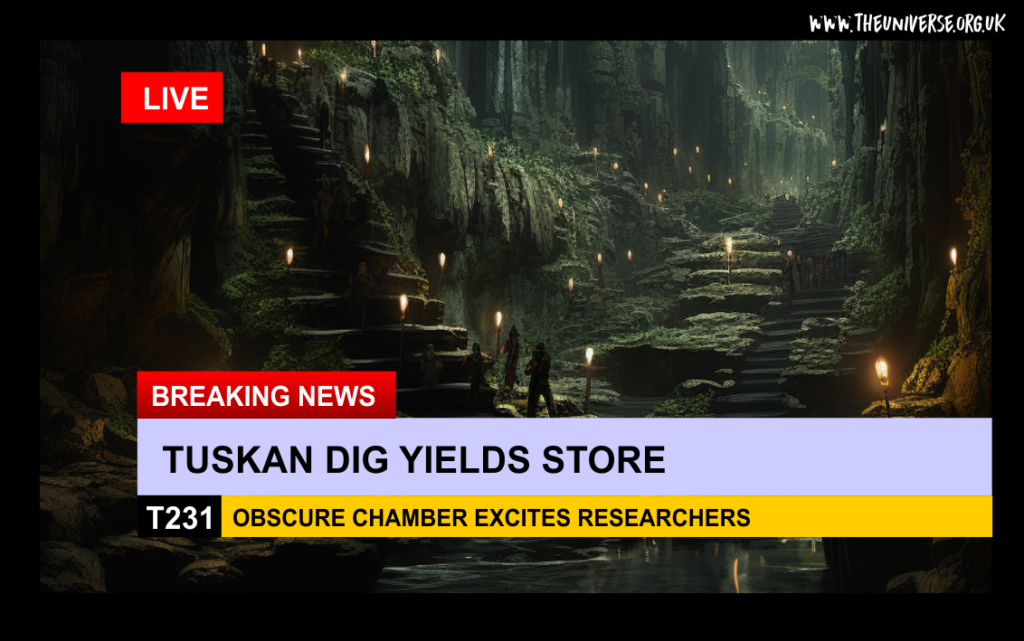
Archaeologists working at the Tuskan Dig have announced the discovery of what researchers are classifying as a Type 559 Food Store, a structure believed to have once served as a controlled nutritional repository within the ancient complex.
Although the chamber itself was found entirely empty, specialists insist the discovery remains of considerable academic importance. The chamber’s internal geometry, storage recesses, and environmental regulation fittings are said to correspond closely with the rarely documented Type 559 architectural typology previously hypothesised in comparative Forerunner facility studies.
According to Dr Avicenna, director of the excavation project, the find offers “a valuable data point in understanding the logistical and metabolic support infrastructure that underpinned the operational ecology of the site.”
Scholars have long debated whether installations such as Tuskan functioned primarily as research complexes, habitation zones, or transitional operational nodes within a broader interstellar system of activity. The identification of a food storage chamber—particularly one with such distinctive structural characteristics—suggests that sustained biological occupancy may once have been a design assumption.
More intriguingly, the chamber’s empty condition has sparked discussion among specialists. Some researchers argue that the absence of preserved nutritional substrates may indicate intentional decommissioning protocols, while others suggest later scavenging events or biochemical decay processes.
Several structural features—including sealed thermal conduits and patterned storage alcoves—are now undergoing detailed analysis.
While the discovery may appear mundane to non-specialists, researchers emphasise that such finds contribute to the slow accumulation of evidence needed to reconstruct the daily operational rhythms of the mysterious civilisation that constructed the Tuskan complex.
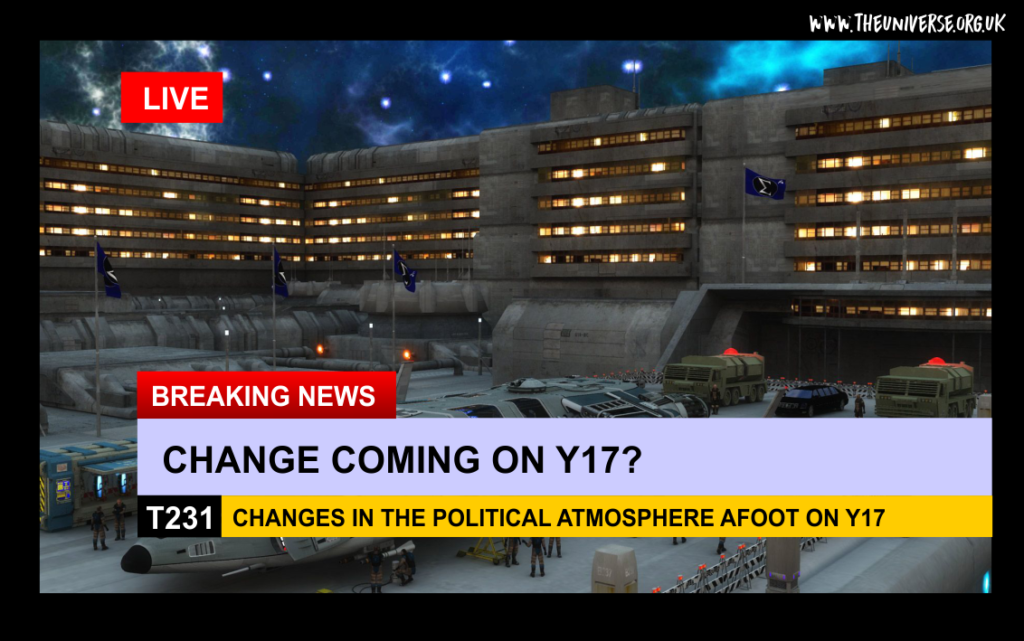
A noticeable shift in public commentary surrounding the future of Y17 has emerged across several independent media outlets and civilian information networks this week. A series of articles, opinion pieces, and commentary programmes have drawn renewed attention to the risks of heavy external influence in the planet’s fragile political environment.
Much of the discussion focuses on the lessons of the civil war years and the delicate balance created by the post-conflict settlement that stabilised the Democratic Authority in the West. Analysts have also revisited the role played by outside actors during that period, noting both constructive mediation efforts and more controversial interventions.
Particular attention has been directed toward proposals that might alter Y17’s current political status, with commentators urging caution about any steps that could undermine local autonomy or reignite factional tensions.
While no coordinated source for the renewed commentary has been identified, the narrative gaining traction across Y17’s networks emphasises stability, gradual reform, and wariness of sudden geopolitical realignment.
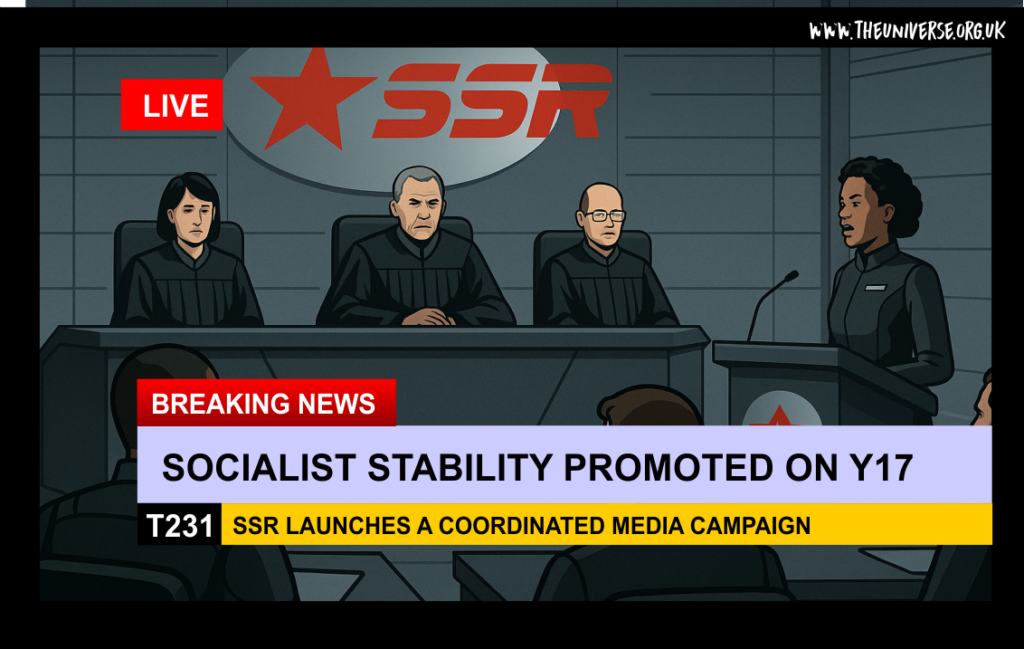
SSR Launches Media Campaign on Y17
Y17, Quadrant 7 — The Sirius Socialist Republic has launched a coordinated media campaign aimed at the population of Y17, promoting what officials describe as the “values of socialist stability, equality, and collective security.”
The campaign, broadcast across holonet networks and local media platforms, highlights the SSR’s role in stabilising the system during the recent crisis and credits the leadership of Mustar for helping prevent wider conflict. Messaging emphasises the Republic’s claim that its diplomatic and security efforts helped deter escalation while protecting civilians during the unrest.
Short documentaries, interviews with workers, and historical retrospectives on the conflict have been widely circulated. Several broadcasts frame the events on Y17 as evidence of the dangers posed by external interference and the need for stronger regional cooperation.
Analysts note that the campaign appears designed to cultivate public opinion ahead of any future political alignment discussions. While the messaging stops short of explicitly advocating political union, repeated references to “shared socialist values” and “a common future” have been interpreted as an invitation for closer ties with the Republic.
Reaction on Y17 has been mixed. Some civic groups welcomed the emphasis on peace and reconstruction, while others criticised the broadcasts as overt political messaging aimed at influencing local debate about the system’s long-term political future.
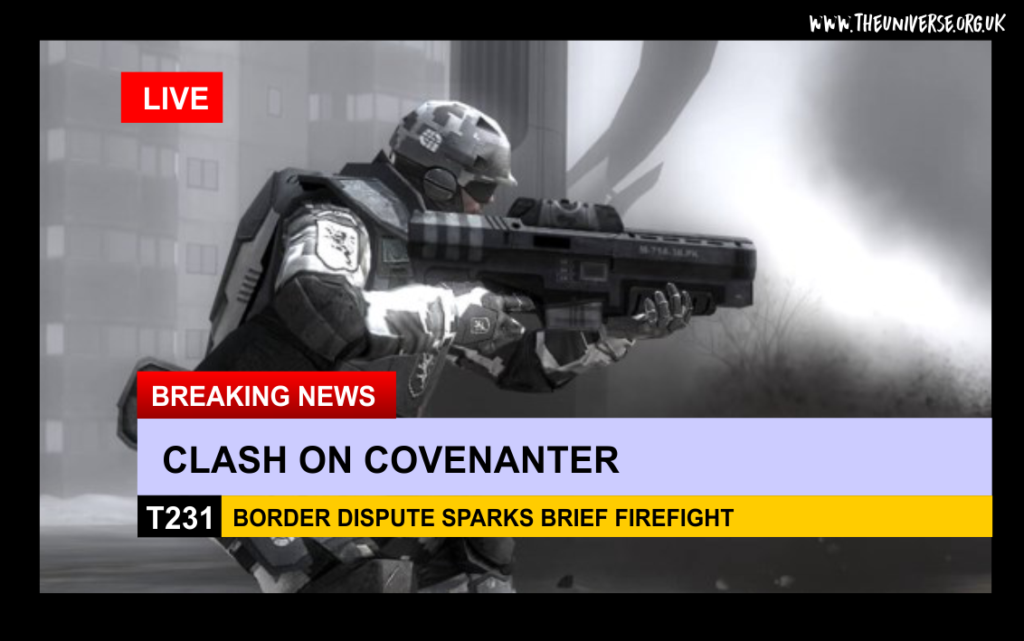
A brief but tense armed clash has erupted between rival colonial factions on the independent world of Covenanter, highlighting the fragile political balance on the subsistence colony .
The incident reportedly occurred near the disputed boundary between the Teal Lake Confederacy and the northern territories controlled by the Advanced Exploration of the North, a theocratic community. According to local officials, the confrontation began after a patrol from the Confederacy attempted to dismantle what it described as an “unauthorised observation post” constructed close to the frontier.
Witnesses say the situation escalated rapidly, with both sides deploying lightly armed militia units and exchanging sporadic fire for several hours before community leaders intervened to halt the fighting.
Casualties appear limited, with medical workers confirming a small number of injuries but no confirmed fatalities. However, the incident has triggered widespread concern among residents of Covenanter’s scattered settlements.
Covenanter’s fragile political structure has long been shaped by the coexistence of three colonial communities with distinct governance systems and religious traditions, including Hindu, Taoist, and True Jedi adherents.
Observers say that disputes over water access, grazing territory, and small-scale mining claims have periodically strained relations.
Local mediators from the Best Free Church community have begun emergency discussions aimed at preventing further escalation.
Although the skirmish was brief, analysts warn that repeated incidents of this kind could undermine the delicate coexistence that allows the remote and economically struggling colony to function at all.
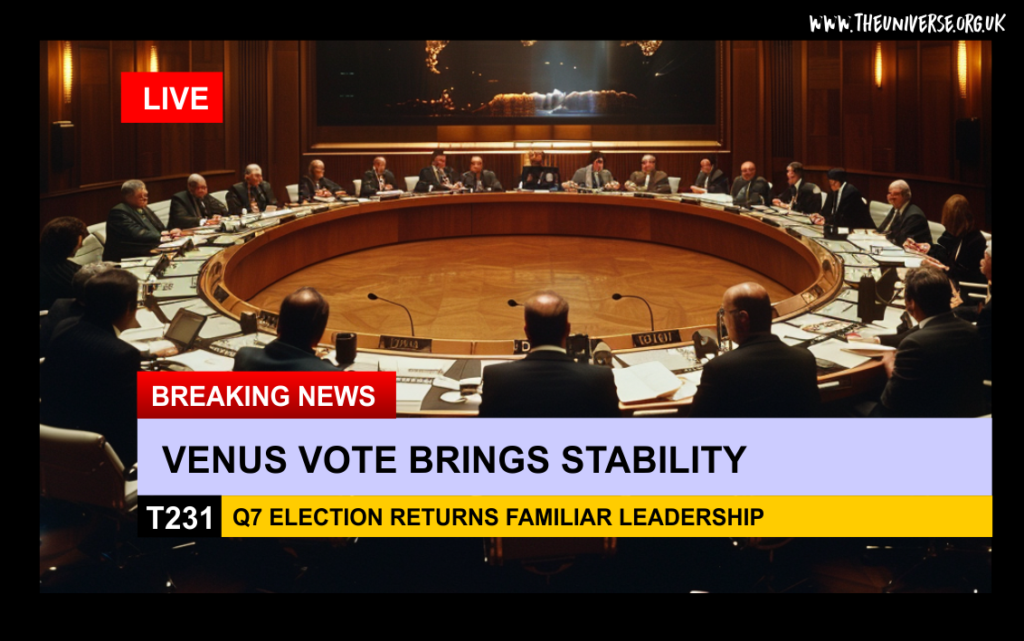
The Republic of New Venus has completed its Quadrant 7 elections, with results broadly confirming expectations that the existing administrative balance would remain largely unchanged.
The vote determines the officials responsible for inter-colony coordination, economic development, and strategic liaison across the Venerian systems in the quadrant. While the Quadrant Governor continues to be appointed by the central government in Quadrant 0, these elections are widely regarded as a key indicator of policy direction for the regional administration.
Early results suggest that the mix of reform-minded and centralist representatives remains largely intact. Reformist blocs advocating greater fiscal flexibility for frontier colonies have retained their positions in several systems, while candidates emphasising tighter coordination with central Venerian strategic policy also held their ground.
Campaign debates had focused heavily on the balance between local autonomy and centralised planning, as well as how closely the Republic should align its economic and diplomatic initiatives with neighbouring powers such as the Greater Federation of Asteel, the Sirius Socialist Republic, and the New Republic.
With no dramatic shift in representation, analysts expect the administration to continue its existing programme of structured economic development and cautious diplomatic engagement.
Observers say the outcome reflects a broader preference among Venerian voters for continuity and administrative stability rather than sweeping political change.

High society on Evian turned out in force this week for one of the most talked-about weddings of the year.
Celebrated holo-theatre performer Lena Voritskaya married acclaimed robotic choreographer Comrade-Designer Pavel Istrin in an elaborate ceremony overlooking the crystal terraces of Evian’s Lake District. The pair are widely known across the Sirius Socialist Republic cultural circuit for their collaborative performances blending human dancers with expressive android ensembles.
The event drew an eclectic guest list of artists, cultural planners, and senior officials from the Republic’s extensive arts committees—many of whom reportedly spent the evening discussing future cultural programmes between dance performances and speeches.
Observers noted the ceremony’s characteristic Sirian blend of elegance and ideology. A choir composed partly of humans and partly of advanced android vocalists performed revolutionary classics, while automated service robots organised the famously efficient reception banquet.
Despite the SSR’s generally modest social standards, Evian remains known as one of the Republic’s most refined cultural centres, making it a fitting venue for what many guests described as “a perfectly planned union of art, technology, and comradeship.”
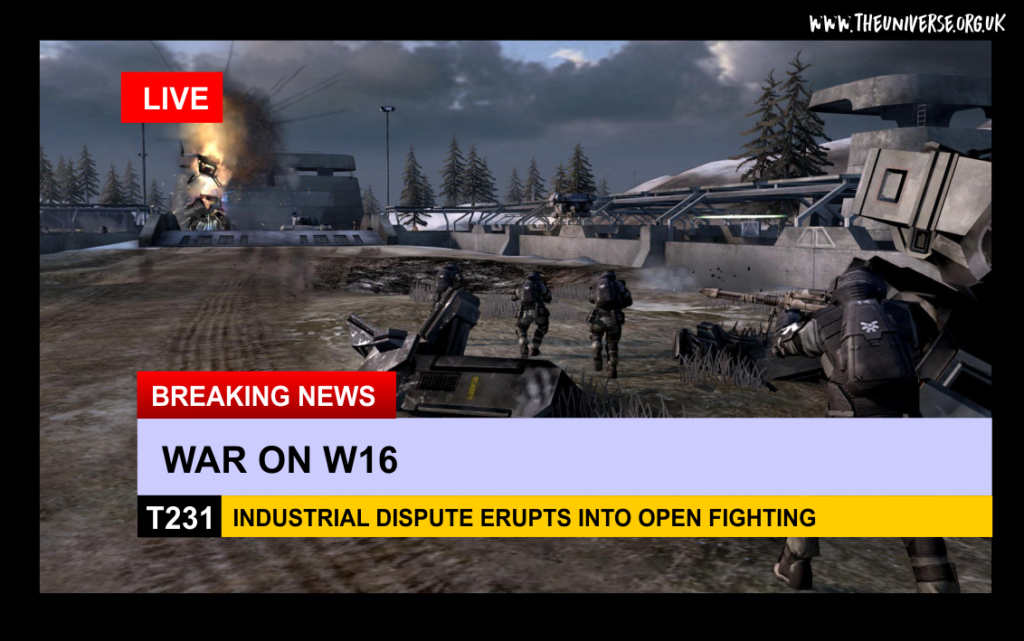
Violence has escalated dramatically on W16, where a long-simmering political dispute between rival colonial factions has erupted into open armed conflict.
The subsistence colony, home to three competing settlements—the New Lake Syndicate, Red Plains of the West, and the People’s Expedition of the North—has for years struggled to reconcile competing visions for the planet’s development. The crisis has centred on proposals by leaders of the New Lake Syndicate to introduce small-scale industrial processing facilities around the planet’s lake regions.
Opponents argue that such projects would pollute the fragile water systems that sustain much of W16’s agriculture and fisheries. Supporters insist industrialisation is essential if the struggling colony is ever to move beyond subsistence-level economics.
Tensions reached breaking point this week when armed groups loyal to the Red Plains of the West reportedly seized several transport depots used by the Syndicate. In response, New Lake Syndicate militia units mobilised to retake the facilities, leading to several firefights in the lakeside settlement of Halvorsen Crossing.
Witnesses describe chaotic scenes, with improvised barricades, small arms exchanges, and the temporary shutdown of inter-colony supply routes. Casualty numbers remain uncertain, though local medical teams confirm several dozen injuries.
The People’s Expedition of the North has so far attempted to remain neutral, calling for an immediate ceasefire and negotiations.
Observers across Quadrant 7 warn that without external mediation, the fragile political balance on W16 could collapse entirely—turning what began as an environmental dispute into a prolonged inter-colony war.
VANCE HOLDS ON
GFA Governor returned by narrow margin
INN — OVER (Q5): Governor Eleanor Vance has been re-elected as head of the Greater Federation of Asteel’s Quadrant 5 administration after a closely fought gubernatorial contest that exposed deep divisions across the GFA’s local colonies.
The final count gave Vance a narrow but sufficient margin over her principal challenger, reformist candidate Marik Ellan, who campaigned on a platform of greater investment in poorer GFA worlds, increased transparency in development contracts, and a review of security priorities across the quadrant.
Vance’s campaign emphasised continuity, fiscal discipline, and the need to maintain GFA credibility in a region where major polities compete heavily for influence. Her supporters argued that Quadrant 5 requires steady administration rather than “dramatic experiments in frontier politics”.
The result was strongest for Vance on wealthier and more stable GFA worlds, while poorer colonies recorded significant swings against the incumbent. Analysts say the election has returned the current administration to office, but not with the authority it had hoped for.
Vice Governor Tomasz Kade called the result “a clear democratic mandate”. Opposition figures described it instead as “a warning written in numbers”.
The immediate challenge for Governor Vance will be turning a narrow victory into a functioning governing coalition.
VENERIAN VOTE SHIFTS
Administrative elections test Volkov’s machine
INN — ASADHA (Q5): Voters across the Venerian Republic’s Quadrant 5 territories have gone to the polls in elections for senior administrative and regional oversight posts beneath Governor Aleksandr Volkov.
The governorship itself was not contested. Under Venerian practice, the Quadrant Governor remains a central Republic appointment. However, elected administrative offices control important areas of colonial management, including infrastructure oversight, budget scrutiny, trade liaison, public works supervision, and local service delivery.
Early results suggest that pro-Volkov administrative candidates have retained a working majority, but with reduced margins in several districts. Reformist and localist candidates performed strongly on less prosperous worlds, particularly where voters complained of slow development, poor transport links, and limited access to senior decision-makers.
Government-aligned candidates did best on the wealthier Republic worlds and in the major administrative centres of Asadha (Q5), Tear (Q5), and Terravision (Q5). Opposition commentators described the results as “a procedural election with political consequences”.
Senior Diplomat Envoy Nadia Petrovna Kirov said the vote demonstrated the Republic’s “disciplined pluralism and administrative maturity”. Critics argued that real power remains concentrated around the Governor’s office.
The immediate effect is stability. The longer-term message is less comfortable: Venerian citizens in Quadrant 5 appear loyal, but increasingly impatient.
ROBOT ROW ON BHADRAPADA
UOX officials deny illegal AI research
INN — BHADRAPADA (Q5): Internal political tensions are rising on the Union of Xyon world of Bhadrapada (Q5) following claims that new administrative robots used in warehousing, port scheduling, and municipal maintenance may be operating beyond their licensed cognitive limits.
The dispute began when opposition councillors demanded access to procurement records for the Civic Autonomy Modernisation Programme, a UOX-backed efficiency project intended to reduce labour shortages and improve local service delivery. Critics allege that several machine-management systems are showing “adaptive decision chains” inconsistent with ordinary non-sentient automation.
Planetary officials strongly deny any breach of the Stickney Treaty, insisting that all systems remain well below prohibited SAID thresholds and contain approved limiter architecture. A spokesperson described the allegations as “technically illiterate political theatre”.
That has not ended the controversy. Labour groups fear job displacement, conservative factions fear illegal AI drift, and pro-automation reformers accuse both sides of exploiting ancient anti-robot anxieties. Several unions have called for an independent audit before further machines are deployed.
No AIMS referral has yet been confirmed, and UOX authorities appear determined to keep the matter internal. However, on any world where robotics and AI are mentioned in the same sentence, political management can rapidly become an interstellar legal problem.
HERDS HIT ON BRAKIR
Livestock disease threatens frontier food supply
INN — BRAKIR (Q5): Authorities on the Independent world of Brakir (Q5) have imposed emergency movement controls after a fast-spreading livestock disease was confirmed in several rural settlement zones.
The disease, locally described as grey-mouth fever, affects the colony’s primary meat and dairy animals, causing weakness, respiratory distress, and rapid loss of body mass. Veterinary officials say there is no evidence of human infection, but the economic and food-supply implications could be severe.
Brakir (Q5) is a subsistence-level colony with limited reserve capacity. Much of its population depends on local herds for protein, fertiliser, transport labour, and barter trade. Quarantine cordons have now been placed around three agricultural districts, with animal markets suspended and off-world livestock exports temporarily halted.
The planetary administration has requested diagnostic assistance and vaccine stocks from neighbouring systems, though no major relief mission has yet been announced. Independent traders warn that delay could force emergency food imports at prices Brakir (Q5) can scarcely afford.
Local officials have urged farmers not to conceal sick animals. “A hidden case today becomes a failed harvest tomorrow,” one veterinary officer said.
The outbreak is likely to test both Brakir’s fragile public administration and the willingness of nearby powers to provide aid without demanding political concessions.
GENE SCARE ON MALISKY
Doctors investigate unexplained child illnesses
INN — MALISKY (Q5): Health officials on the Independent world of Malisky (Q5) have requested external medical assistance following reports of unexplained developmental disorders among children in several isolated settlement communities.
Local doctors say the cases appear to involve abnormal immune responses, unusual metabolic instability, and inherited markers that do not match standard colonial screening records. The planetary health office has stressed that no confirmed cause has yet been identified, but has acknowledged that “irregular genetic modification cannot currently be ruled out.”
That statement has caused alarm on Malisky (Q5), a very poor frontier world with limited laboratory capacity and weak public health infrastructure. Parents in affected communities have accused the authorities of acting too slowly, while officials insist that the first priority is accurate diagnosis rather than speculation.
Several possibilities are being examined, including contaminated fertility treatments, black-market gene therapies, degraded medical stock, or undocumented adaptation programmes carried out during the colony’s early settlement period.
Independent medical charities have called for rapid genetic sequencing, secure sample transport, and protection for families who may fear legal consequences. Off-world observers warn that if deliberate unauthorised modification is confirmed, the issue could move from public health into criminal investigation.
For now, Malisky (Q5) faces a more immediate question: how many children are affected, and why?
