
A severe and highly unusual heatwave has swept across W2, compounding the challenges faced by the sparsely populated independent colony W2. Surface temperatures in the New Desert of the North and surrounding extraction zones have surged well beyond historical seasonal norms, placing acute strain on already limited infrastructure. Power distribution networks—never designed for sustained thermal peaks—have experienced intermittent outages, while shallow water reserves are evaporating at accelerated rates.
W2’s subsistence-level economy and fragmented governance structure have complicated coordinated response. Governor Elias Montoya has called for calm and urged communal cooling measures, while Director Sienna Varkas of the Red Prospect Community has prioritised maintaining mineral output despite deteriorating working conditions. Chairman Harun Kadesh has imposed temporary industrial shutdowns during peak heat hours to prevent equipment failure.
Environmental specialists suggest the event is likely the result of natural atmospheric oscillations interacting with W2’s already harsh climatic baseline. No terraforming activity exists in Quadrant 7, and authorities have dismissed speculative claims of artificial interference.
With limited off-world support and modest trade links, W2 must rely largely on internal resilience. For a colony accustomed to adversity, the heatwave is another stern reminder of the thin margin between survival and crisis.

EXERCISE SHINING STAR has concluded in Quadrant 7, bringing together major naval elements of the Earth Empire, Mars Association of Free Colonies, Wolf359 Commonwealth, and the Republic of New Venus in a high-visibility multinational drill.
The exercise centred on rapid coalition response to system-level threats, contested-communications manoeuvre, and coordinated defence of orbital infrastructure. Participating fleets operated under an integrated command structure designed to test interoperability under stress. Officials acknowledged minor doctrinal and software integration issues but described overall cooperation as disciplined and effective.
Beyond its technical outcomes, SHINING STAR is widely viewed as strategically performative. The deliberate scale and public framing of the exercise suggest signalling intent. Observers across the quadrant note that the coalition represents a significant concentration of naval capability. The absence of an explicitly named adversary has not prevented speculation.
Some analysts interpret the drill as a stabilising signal aimed at discouraging opportunistic coercion by rival powers. Others suggest it is directed more subtly at fence-sitting polities, demonstrating that alignment with this grouping offers tangible security dividends. A more sceptical view holds that the exercise may prompt counter-signalling from competitors wary of bloc formation.
Whether SHINING STAR marks the quiet consolidation of a durable security architecture—or merely a temporary convergence of interests—remains unclear. What is evident is that four major powers have chosen to train together, publicly, and at scale. In Quadrant 7’s increasingly competitive environment, that choice alone carries strategic weight.
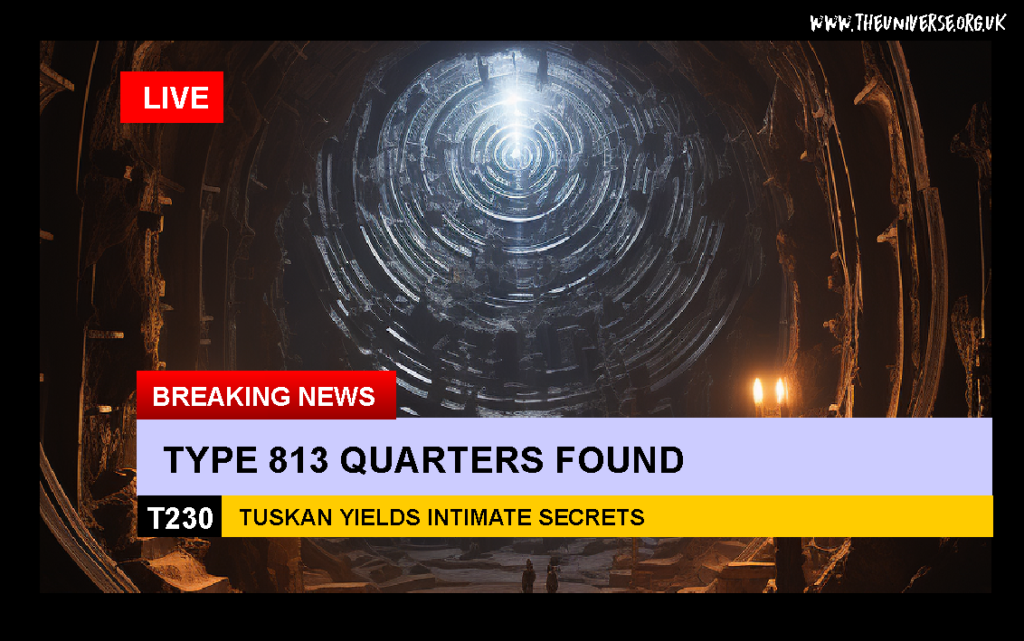
The Tuskan Dig has produced what senior researchers are already calling one of the most culturally revealing discoveries in the site’s long and turbulent history: a fully delineated Type 813 Living Quarters complex.
Unlike prior finds dominated by machinery, storage chambers, and defence systems, the Type 813 structure appears explicitly domestic in function. Excavation teams report compartmentalised sleeping recesses, modular environmental controls, and a cluster of personal-scale artefacts arranged with deliberate spatial symmetry. While no biological material has yet been recovered, the architectural layout suggests sustained habitation rather than transient occupancy.
Academic enthusiasm has been immediate and intense. Scholars argue that the find shifts Tuskan’s narrative from industrial and strategic to intimate and social, offering rare insight into Forerunner daily life. Micro-surface analysis is already underway to determine patterns of wear that may indicate behavioural routines, social hierarchy, or even familial structuring.
Speculation, inevitably, has outpaced evidence. Some researchers propose that Type 813 quarters may have housed a specialist caste—perhaps engineers responsible for the adjacent technological arrays. Others advance more ambitious theories: that the quarters were part of a containment habitat for non-human intelligences, or even an early interface space between biological Forerunners and artificial cognitive entities.
Such claims remain unverified. Yet the discovery undeniably humanises—or perhaps “Forerunner-ises”—the site. For the first time, Tuskan presents not merely systems and residues, but the spatial imprint of lived experience.

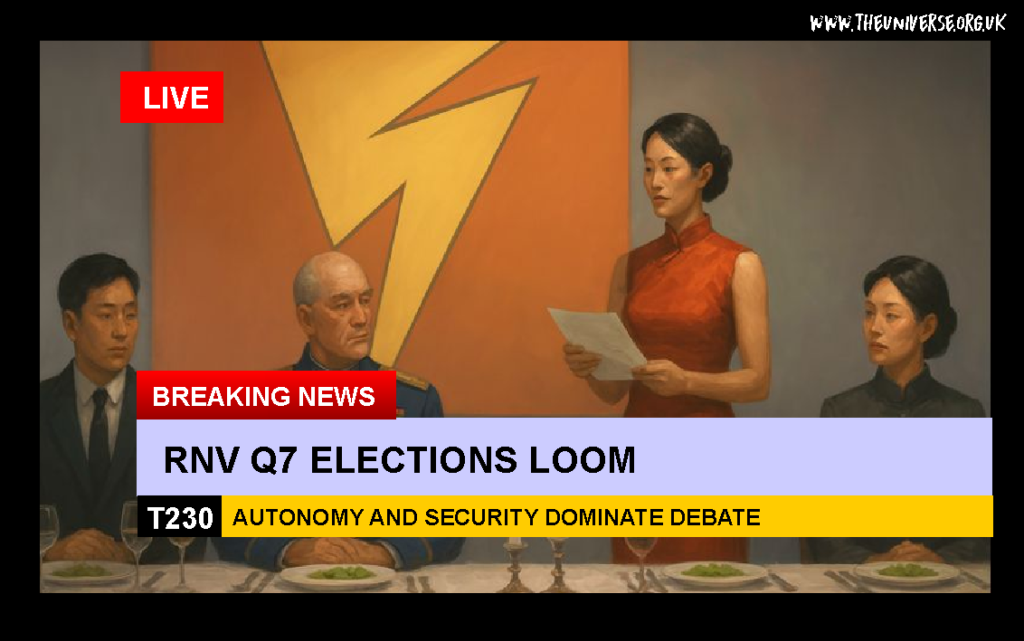
The Republic of New Venus is preparing for Quadrant 7 elections in 3240, a contest expected to shape administrative priorities across its regional colonies for the coming cycle.
Although the Quadrant Governor remains appointed by Central Government in Quadrant 0, the elections determine key administrative posts responsible for inter-colony coordination, economic development, and strategic liaison. As in previous cycles, the vote is regarded as a referendum on policy direction rather than executive leadership.
Campaign rhetoric has intensified in recent weeks. Reformist blocs are advocating enhanced local autonomy and greater fiscal discretion for frontier worlds, arguing that responsive governance is essential amid shifting geopolitical conditions. More centralist factions emphasise security coordination, disciplined resource allocation, and stronger alignment with core Venerian strategic doctrine.
Relations with neighbouring powers in Quadrant 7—including the GFA, SSR, and New Republic—have also emerged as defining themes. Candidates differ on whether the Republic should prioritise economic integration initiatives or maintain a more guarded posture.
Turnout is forecast to be robust, particularly in economically dynamic systems where administrative decisions directly affect trade access and infrastructure investment. Observers note that while the elections will not alter the constitutional structure of Venerian governance, they will significantly influence the tone and tempo of policy implementation across Quadrant 7 through 3245.
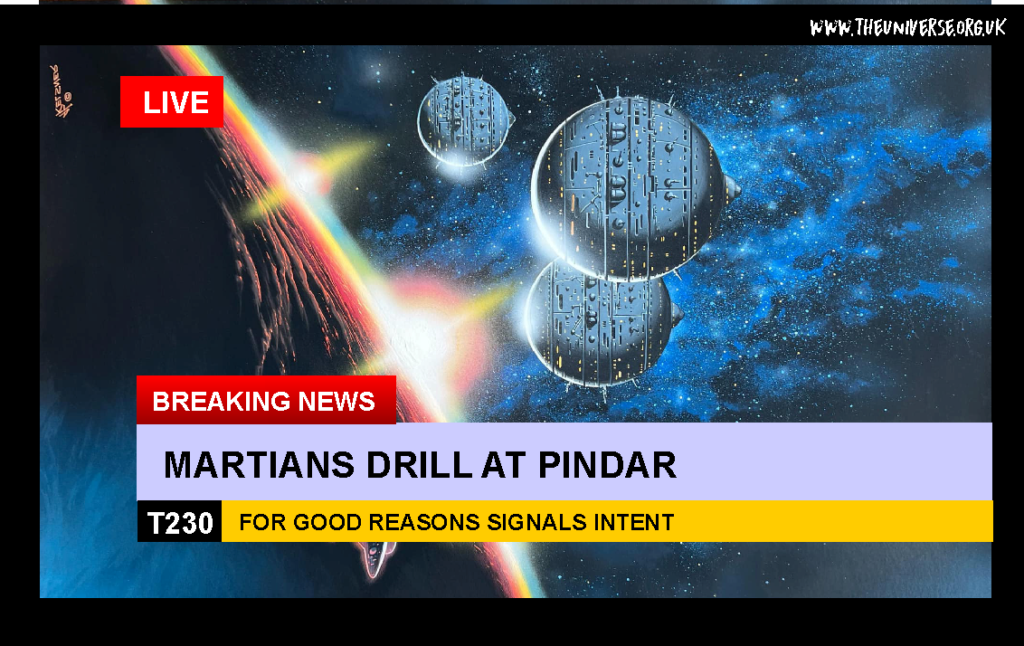
The Mars Association of Free Colonies has concluded EXERCISE FOR GOOD REASONS in the strategically significant Pindar system, staging one of its most complex naval drills of the current cycle.
Multiple Martian task forces rehearsed the defence of orbital infrastructure against a peer-level adversary equipped with substantial carrier-based strike assets. The exercise emphasised layered orbital screening, rapid reinforcement of vulnerable facilities, and coordinated counter-strike operations under compressed timelines. Command elements were subjected to simulated communications degradation and logistical strain to test resilience under sustained pressure.
Official communiqués describe the manoeuvres as precautionary and doctrinally routine. However, the geopolitical context gives the exercise broader significance. Pindar occupies a sensitive position within Quadrant 7, where military signalling and economic competition increasingly overlap. The focus on defending orbital nodes—critical to trade, energy distribution, and communications—appears calibrated to reassure domestic constituencies while deterring opportunistic interference.
Analysts note that the exercise’s scale projects capability without overt provocation. By framing the drill around defensive imperatives rather than offensive projection, the MAFC signals preparedness and restraint in equal measure.
In a quadrant characterised by joint manoeuvres, treaty negotiations, and competitive infrastructure diplomacy, FOR GOOD REASONS serves as a clear reminder: Martian systems are organised, defended, and not open to coercive testing.
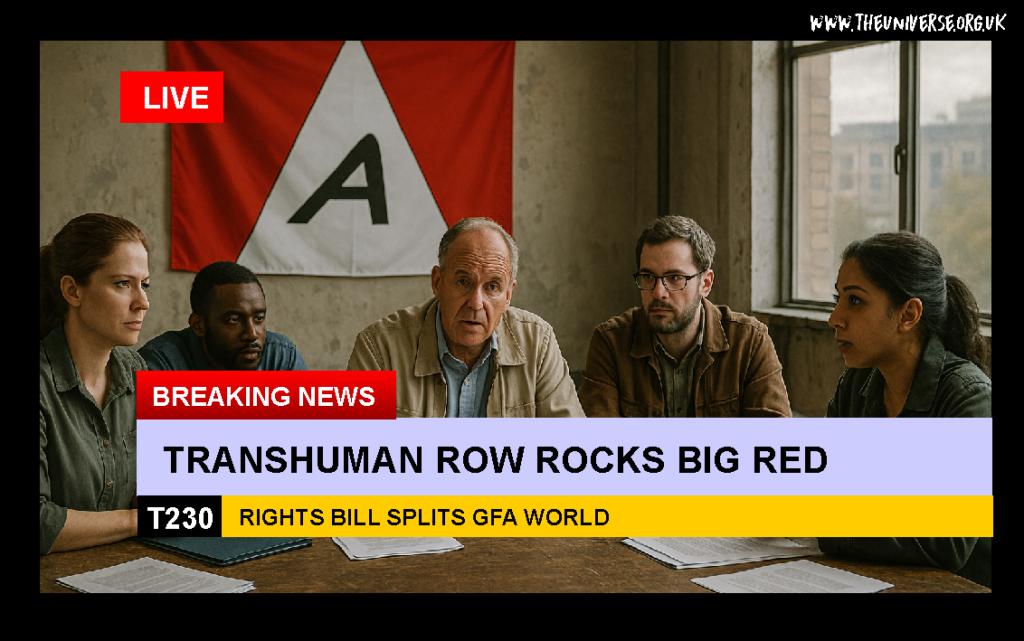
Interstellar Network News reports a widening internal political crisis on Big Red, a prominent member world of the Greater Federation of Asteel in Quadrant 7, following the introduction of controversial legislation targeting the political and civic status of transhumans.
The proposed “Civic Integrity and Biological Transparency Ordinance,” tabled in the planetary Assembly, would require mandatory registration of enhanced citizens, impose disclosure rules for candidates seeking public office, and establish a review authority to assess whether extensive cybernetic or genetic modification affects eligibility for certain leadership roles.
Proponents frame the bill as a safeguard for democratic accountability and institutional trust. Opponents, including organised transhuman associations and several industrial guilds, argue it amounts to discrimination dressed as regulatory reform. Large demonstrations have taken place in major manufacturing districts, with protesters insisting that augmentation does not diminish citizenship.
The issue is politically charged within the GFA, where industrial competitiveness and advanced enhancement technologies are tightly intertwined. Critics warn that restrictive policy could deter skilled workers and investors, while supporters insist the Federation must clarify its legal definitions before tensions escalate further.
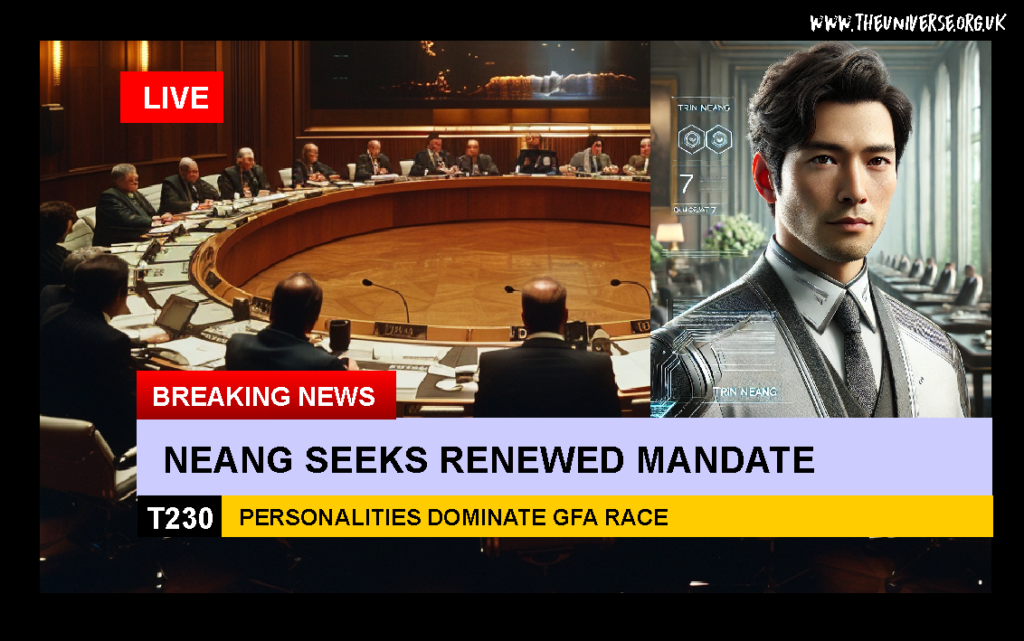
With Quadrant elections approaching and Governor Trin Neang’s administration under scrutiny, Big Red’s debate is rapidly becoming a Federation-wide test of how far enhancement and equality can coexist under GFA law.

The Wolf359 Commonwealth has concluded a carefully calibrated media campaign across Quadrant 7, promoting what officials describe as the “Wolfer way” of governance. While presented as understated and fact-led, the initiative has been widely interpreted as a deliberate effort to consolidate soft power following recent security and diplomatic activity.
Observers note that messaging focused on stability, legal tradition, piracy suppression, and responsible colonial development—implicitly contrasting Wolfer administration with more turbulent developments elsewhere in the quadrant. Analysts suggest the campaign was primarily aimed at domestic audiences and Homeworld stakeholders, though distribution to independent systems such as V10 indicates broader strategic intent.
Reaction beyond Commonwealth space has been cautious rather than hostile. Rival polities appear to regard the effort as conventional reputation management rather than overt propaganda. However, several commentators point out that sustained narrative shaping, combined with visible economic and security initiatives, may incrementally strengthen Wolf359’s influence in contested independent systems over time.
LE NUL LOVE-IN
Celebrity vows brighten a Venerian world
INN — LE NUL (Q5): The usually overlooked Venerian Republic world of Le Nul has become the unlikely centre of Quadrant 5 media attention following the high-profile wedding of holo-drama star Mara Venn and professional ultracricket champion Davin Rell.
The ceremony, held at the newly restored Glasswater Terrace outside the planetary capital, drew celebrities, sporting figures, fashion houses, and senior Venerian cultural officials. Local authorities described the event as “a welcome confidence boost” for Le Nul, which has long struggled to attract off-world visitors despite modest investment in hospitality and public infrastructure.
Republic commentators were quick to present the wedding as evidence that less prosperous colonial worlds can still benefit from cultural tourism, entertainment licensing, and carefully managed publicity. Critics, however, accused the planetary administration of using celebrity spectacle to distract from weak public services and uneven economic development.
Local businesses reported a sharp rise in bookings, with transport operators, hotels, caterers, and security contractors all benefiting from the influx. One restaurant owner told INN: “For once, people are saying Le Nul without laughing.”
Whether the publicity will produce lasting economic gains remains unclear, but for one week at least, Le Nul successfully repositioned itself as Quadrant 5’s most surprising romantic destination.
COOKE LANDS ON ZHALAN
ChronoHound reporter begins MAFC frontier tour
INN — ZHALAN (Q5): Roberta Cooke, the well-known MAFC reporter for ChronoHound TriVid, has arrived on Zhalan (Q5) at the start of what her producers describe as “a ground-level survey of life on the developing colonial frontier.”
Cooke, whose previous reports have combined human-interest storytelling with uncomfortable questions for public officials, was met at the main transit port by local administrators, civic volunteers, and a visibly nervous press liaison team. Her arrival has already attracted attention across MAFC media channels, where Zhalan (Q5) is being presented as an example of both colonial resilience and unfinished development.
ChronoHound has not confirmed the full subject of Cooke’s visit, but local sources expect coverage of housing shortages, transport reliability, youth employment, agricultural output, and the strain placed on planetary services by slow economic growth.
MAFC officials welcomed the visit, stating that “honest journalism strengthens public confidence.” Privately, several administrators are reported to be concerned that Cooke may focus less on official development plans and more on the lived experience of ordinary settlers.
For Zhalan (Q5), a world rarely noticed outside MAFC planning circles, the next few broadcasts may prove unusually consequential.
REACTOR LEAK ON DARRK
Independent colony declares local emergency
INN — DARRK (Q5): Authorities on the Independent world of Darrk (Q5) have declared a local emergency following a coolant and radiation leak at the colony’s primary power reactor.
The incident occurred at the North Basin Energy Plant, which supplies heat, power, and water-processing capacity to several settlement clusters. Planetary officials stated that the reactor was shut down “in a controlled but urgent sequence” after warning alarms indicated containment stress in an ageing secondary circulation unit.
No confirmed fatalities have been reported, but medical teams are screening plant workers and nearby residents for radiation exposure. Several hundred colonists have been moved from low-lying habitation blocks as a precaution, while emergency generators are being used to maintain hospital, comms, and food-storage systems.
Darrk (Q5), a subsistence-level colony with limited industrial reserves, is expected to require external technical assistance if the reactor cannot be safely restarted. Independent worlds rarely maintain the specialist engineering teams needed for major reactor repair, and replacement components may take weeks to source.
The incident has already prompted renewed debate over frontier infrastructure standards. Neighbouring governments have offered limited humanitarian support, but no major polity has yet announced a full technical mission.
FEAR STALKS MARTI
Police probe suspected serial killings
INN — MARTI (Q5): Police on the prosperous MAFC world of Marti (Q5) have confirmed that a specialist investigation team has been formed following a series of killings now believed to be linked.
Authorities have released few details, but officials say the victims were discovered in separate districts over a period of several weeks. Early police statements treated the deaths as unrelated incidents, but investigators now believe there are “significant common factors” in the cases.
Marti (Q5), one of the wealthiest MAFC worlds in Quadrant 5, is not accustomed to this kind of public fear. Local media have reported increased private security bookings, falling attendance at evening entertainment venues, and pressure on police commanders to provide clearer advice to residents.
A police spokesperson urged calm, stating that “all available investigative resources” were being applied and that there was no evidence of wider organised violence. That reassurance has done little to quiet speculation across local channels, where commentators are already referring to the unknown killer as the “Marti Shadow”.
MAFC officials have offered forensic and behavioural-analysis support, while insisting the matter remains under planetary police control. The investigation is continuing.
