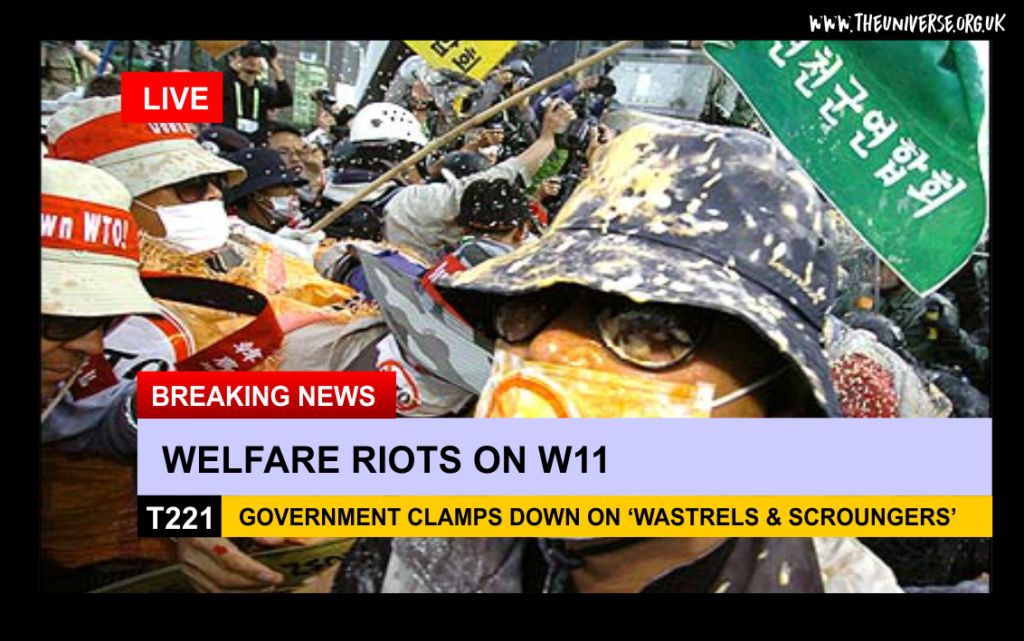
Riots have erupted across several settlements on W11, following severe cuts to planetary welfare stipends. The Holy Progressive Company, led by High Panjandrum Theophilus Webb, condemned the unrest, denouncing protestors as “wastrels and scroungers” undermining social harmony. The colony, only recently settled in 3231 under Skodatech investment, has struggled to provide basic services to its rapidly expanding population. The ruling Enlightened Brotherhood of The Masters teaches disciplined self-reliance, and government rhetoric has turned sharply against those seen as dependent on off-world aid. Police forces have cracked down on gatherings, with dozens arrested. Opposition figures warn that without investment in housing and employment infrastructure, unrest will continue. So far, the administration has offered no concessions.
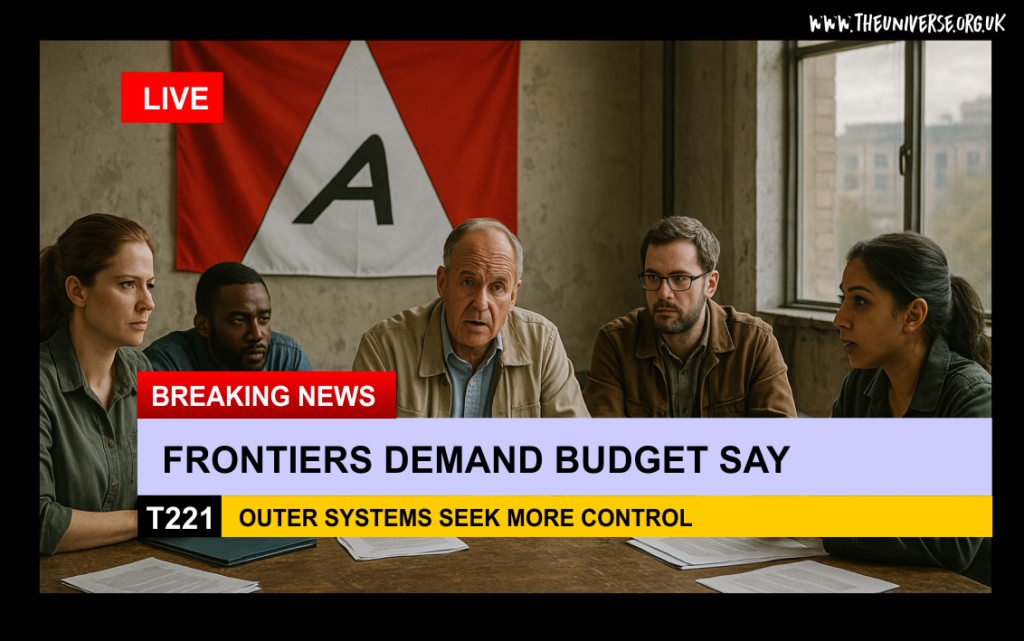
Local authorities on Matanzas, Savannah, and Glace have formally petitioned the GFA Fiscal Oversight Committee for decentralised control over infrastructure budgets. The demand follows the deferral of several planned transit and energy grid upgrades in frontier systems. Elected planetary administrators argue the current budgeting model privileges core worlds like Sumter and Potomax. Astellan response has been muted, though internal GFA memos acknowledge rising discontent. Debate is expected in the next General Congress session on frontier fiscal autonomy.
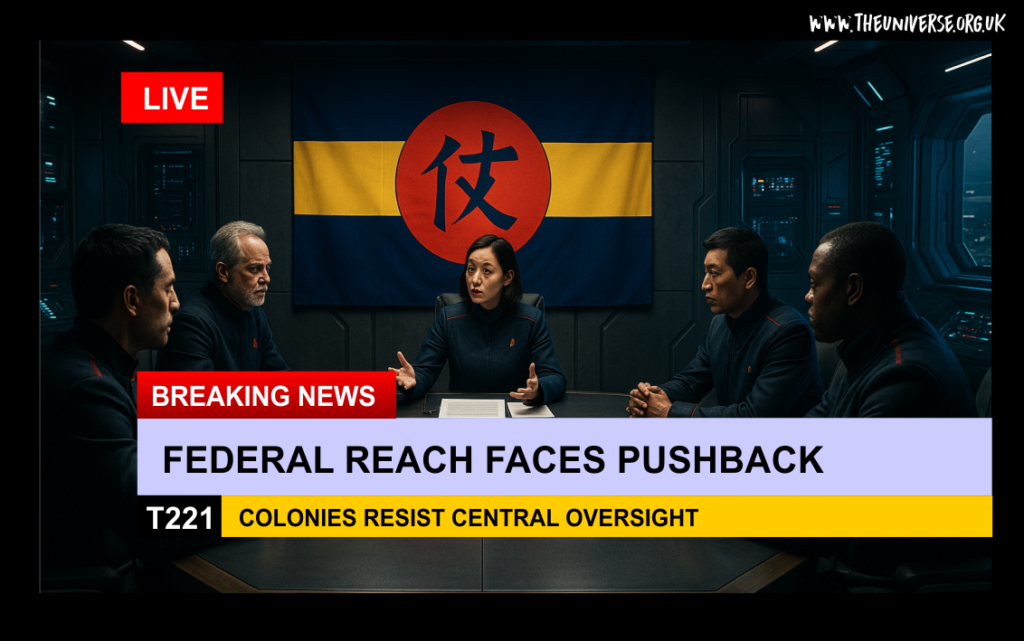
After the central MAFC diplomatic mission resolved the Pindar mining dispute, several governors—including those of Frunz, Thor, and Valhal—have raised concerns over the expanding role of the federal apparatus in planetary governance. While not rejecting federation principles, these colonies are seeking clearer boundaries for intervention. A proposed Charter of Federal Engagement is under informal review by the Free Colonies Assembly. Analysts describe this as a test of post-Pindar federal cohesion and the evolving balance between autonomy and unity within the MAFC framework.
On Forty, whistleblowers from the Planetary Infrastructure Tender Board have released documents alleging non-competitive contract awards for transport megaprojects, implicating firms with ties to New Draconis political donors. A formal inquiry has been initiated by the Republic Senate’s Oversight Committee. President Kellor’s local administration has denied wrongdoing but agreed to suspend pending contract finalisations. The Forty Regional Assembly has called for an independent review, citing declining public trust. This comes amid wider scrutiny of elite-linked investment patterns across key New Republic worlds.
Recent expansions to the Internal Harmony Directorate’s mandate on B’Krath and Oith have prompted renewed public debate. Civic organisations claim new data-sharing directives between local governance and the Directorate enable mass surveillance of planetary networks. Venerian officials insist measures are defensive, citing rising cross-border cyber-intrusions. Nonetheless, a coalition of Venerian jurists has petitioned the Senate for a formal inquiry. Legislative responses remain uncertain, but internal communications suggest the Republic is seeking to defuse the issue quietly to avoid undermining its public image.
The High Tribunal on Gryme has invalidated sections of the Central Data Governance Act, declaring several provisions unconstitutional under SSR planetary statutes. This unprecedented ruling has triggered a legal standoff, with the Ministry of Justice suspending court operations and ordering internal security deployments around judicial complexes. Gryme’s Chief Justice has reportedly gone into seclusion. Party authorities on Evian are reviewing emergency powers legislation to reassert central control. Analysts fear the precedent may embolden other worlds to test the limits of SSR doctrinal law.
On V1 and Tiel, friction is mounting between clerical authorities and secular planetary administrators over the interpretation of governance protocols. Recent disagreements have centred on environmental regulation enforcement and educational curriculum standards. The High Ecclesiastical Council has issued a statement urging “doctrinal consistency” across all colonial governance. Local officials have countered with calls for updated administrative autonomy guidelines. The issue has not yet escalated to the Union Synod but is being closely monitored. Political observers consider it a test case for modernising theocratic governance within the UOX.
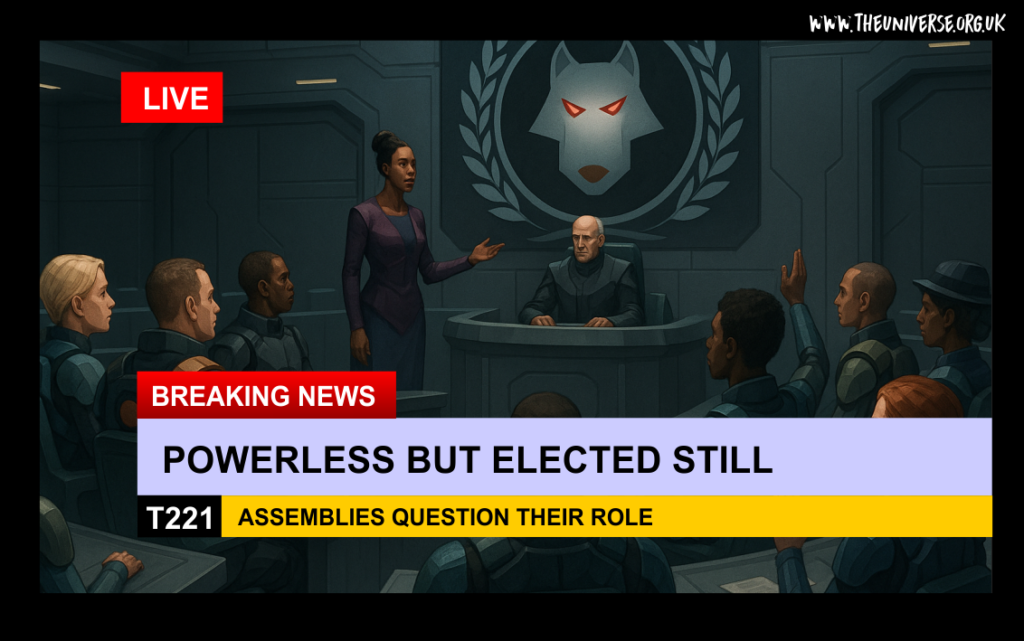
Local elections on Flash Peek and V11 concluded with dominant victories for pro-Commonwealth parties. However, several newly elected deputies have openly criticised the limited authority of planetary legislatures, citing the concentration of power in unelected Quadrant officials appointed from the Wolf359 homeworld. Policy initiatives passed locally have reportedly stalled at the Quadrant level without response. Civic groups are now pushing for charter reforms to grant assemblies clearer legislative competences. The Governor-General’s office has yet to issue a formal reply.
Internal divisions within the Centauri Conglomerate Board have paralysed decision-making amid rising unrest on New Mald. Leaked transcripts from executive sessions show deadlock between directors favouring security intervention and those prioritising commercial risk management. As a result, no coordinated response has been made to protest escalations. With the planetary administration overwhelmed and protest movements gaining strength, analysts warn of a possible transition from civil disruption to organised insurrection. Investor confidence has sharply declined, with credit insurers downgrading Conglomerate positions on New Mald-linked portfolios.
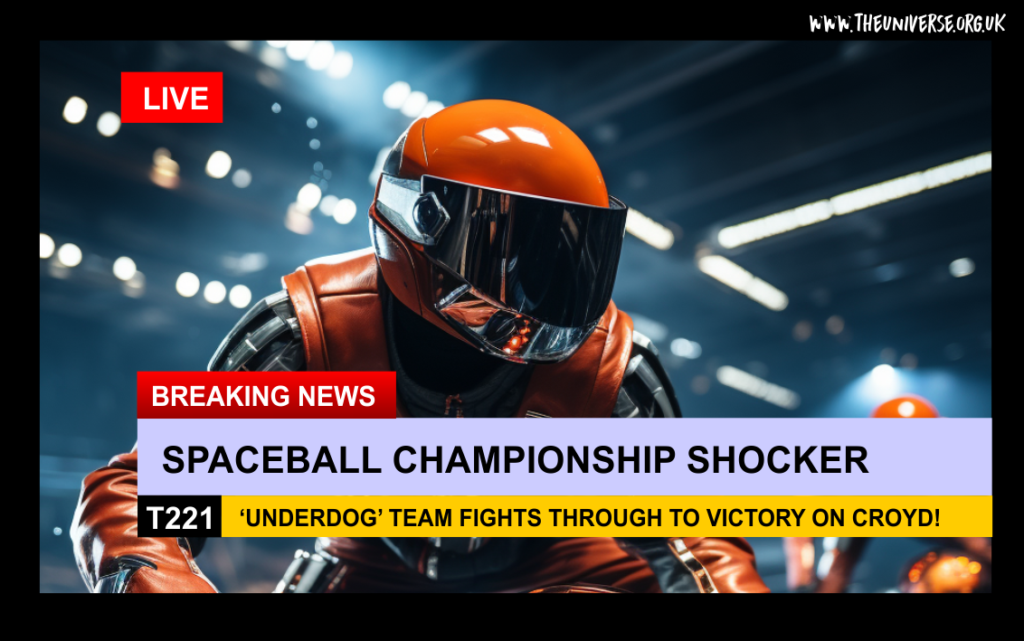
In a stunning upset, the Makey Miners claimed victory in the Quadrant 7 Inter-Colonial Spaceball Championship, defeating the heavily favoured Croyd Centurions in a tense final match held before a packed stadium on Croyd. The Miners—ranked 11th at the start of the tournament—relied on tight defensive play and the explosive speed of striker Jarla Kwan, who scored twice in the final period. The Centurions, unbeaten for three seasons, struggled to adapt to the Miners’ unorthodox formation and were repeatedly caught out on counterattacks. Kwan’s final goal, a blistering strike from centre field, sealed the 3–2 win to roaring cheers from travelling Makey fans. Team captain Drego Talmann, a former asteroid hauler, credited their victory to “grit, strategy, and a refusal to be intimidated.” Local authorities reported spontaneous street celebrations across Makey as the colony marked its greatest sporting triumph to date.
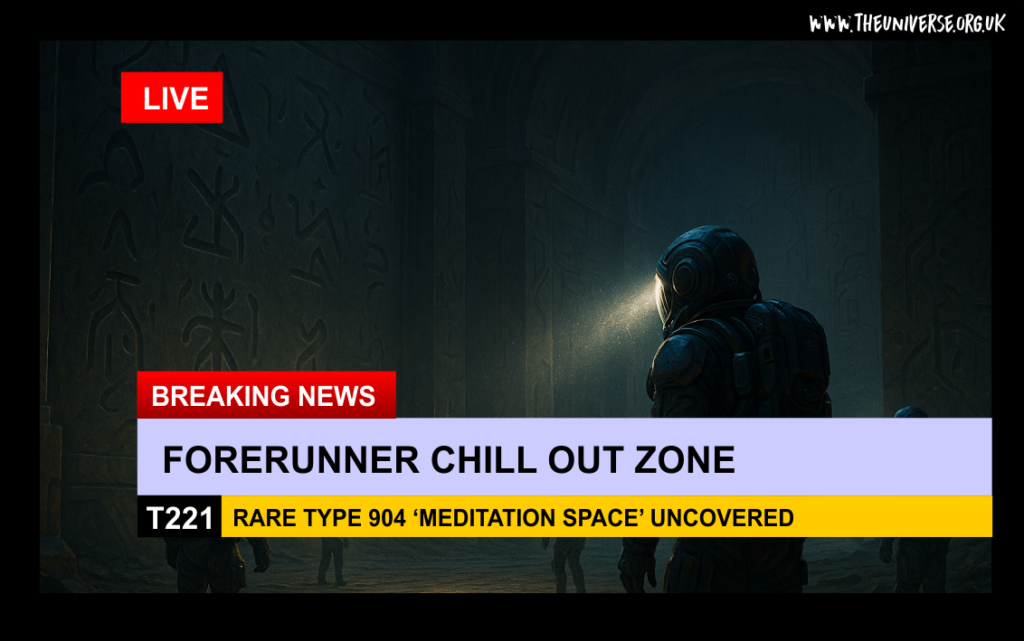
Archaeologists at the Tuskan Dig have announced the discovery of a rare Type 904 Forerunner Meditation Chamber, only the third such chamber ever documented. Located deep within an uncharted sublevel, the chamber is a circular, acoustically resonant structure constructed from polished alloyed stone, with an intricate ceiling lattice emitting a faint bioluminescent glow. The floor is inscribed with a spiral of Forerunner glyphs believed to guide meditative focus. Initial scans indicate residual neural resonance patterns—suggesting the chamber was used for intensive cognitive or spiritual exercises, possibly involving non-human consciousness. Dr Yara Kessler, lead xenocultural analyst on site, described the find as “a profound glimpse into the introspective dimensions of Forerunner civilisation.” The chamber was sealed behind a collapsed corridor, suggesting deliberate preservation. Researchers are proceeding cautiously due to potential psionic or environmental effects. The chamber will be the subject of an interdisciplinary study beginning next turn under MAFC supervision.
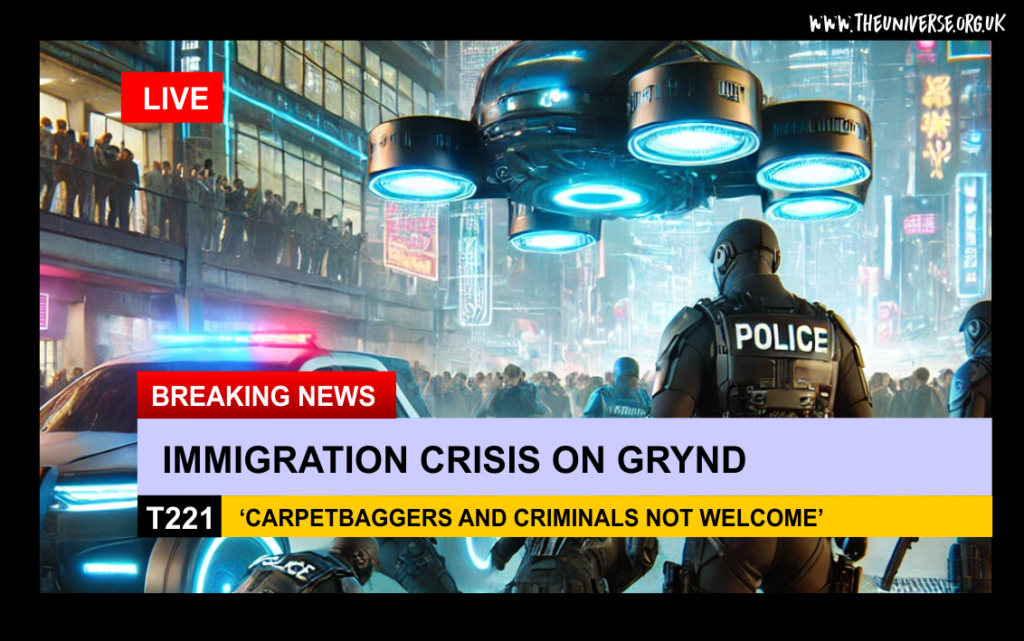
A sharp political crisis is unfolding on the independent colony world of Grynd, after the influential National Mining Colony (NMC) issued a statement denouncing “carpetbaggers and criminals” among recent immigrant arrivals. The announcement marks a radical departure from Grynd’s long-standing reliance on off-world immigration to drive economic expansion—particularly in its vital mining sector.
NMC Governor Elias Carter, under pressure from both labour unions and populist reformers, defended the move as necessary to preserve “social order and employment integrity.” However, critics across the planet have condemned the language as inflammatory and divisive. Both the White Mountain Republic (WMR) and the Renewed Expansion League (REL) have issued formal objections, citing potential damage to Grynd’s interstellar reputation.
The Grynd Extraction Consortium (GEC) has remained silent, though sources suggest concern that labour shortages could disrupt export contracts. Observers believe the policy may be a tactical play by NMC hardliners seeking leverage in upcoming negotiations over deep-core access rights.
Given Grynd’s fragile political balance, the sudden shift on immigration has ignited fierce debate. Protests have already broken out in several settlements, and there are growing fears that the issue could escalate into factional confrontation if not resolved through the GEC’s mediation framework.
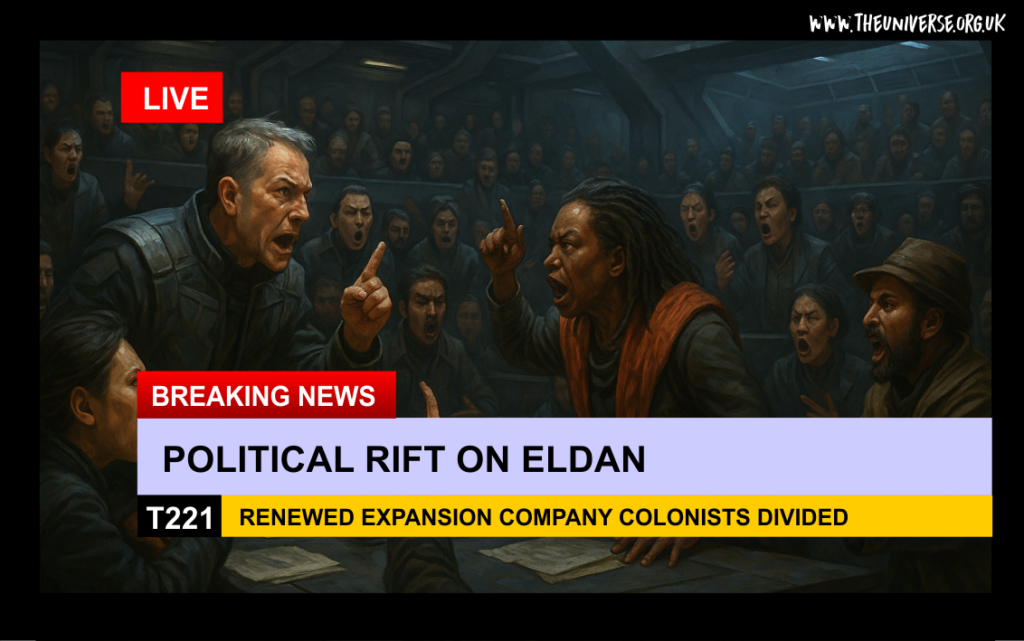
Tensions are rising on the independent world of Eldan as a serious political rift emerges within the Renewed Expansion Colony (REC)—one of Eldan’s key founding groups. The division centres on the colony’s alignment with the broader Renewed Expansion League (REL) movement from Grynd, which some colonists claim is exerting undue influence over Eldan’s internal politics.
Hardline supporters argue that Eldan should formally affiliate with REL’s militarised governance model to secure off-world investment and defence guarantees. Opponents, however, warn that such alignment would compromise Eldan’s political autonomy and risk entangling it in external territorial disputes.
The dispute has stalled local governance, with assembly sessions ending in walkouts and accusations of corporate manipulation. Eldan’s other colonies have so far remained neutral, but observers warn the rift could destabilise inter-settlement cooperation. Calls for mediation from the planetary council are growing, but no compromise has yet been reached.

A major disease outbreak has struck the struggling colony of W9, overwhelming its limited medical infrastructure and prompting urgent appeals for off-world aid. The illness—provisionally named Redwave Syndrome—is believed to be caused by a mutated fungal spore native to the planet’s southern wetlands, recently disturbed by terraforming operations.
Redwave presents with high fever, hallucinations, severe dehydration, and distinctive crimson skin blotching. It spreads rapidly via airborne spores in humid environments, making containment difficult in W9’s densely populated lowland zones.
With only one functioning bio-clinic on the colony, medical teams have been forced to triage patients in makeshift shelters. Local governance has declared a planetary emergency, but relief efforts are hampered by communication outages and limited atmospheric shuttle access.
Several interstellar aid organisations have begun mobilising supplies, but fears are growing that without immediate quarantine and specialist support, W9 could face catastrophic mortality rates in the coming weeks.
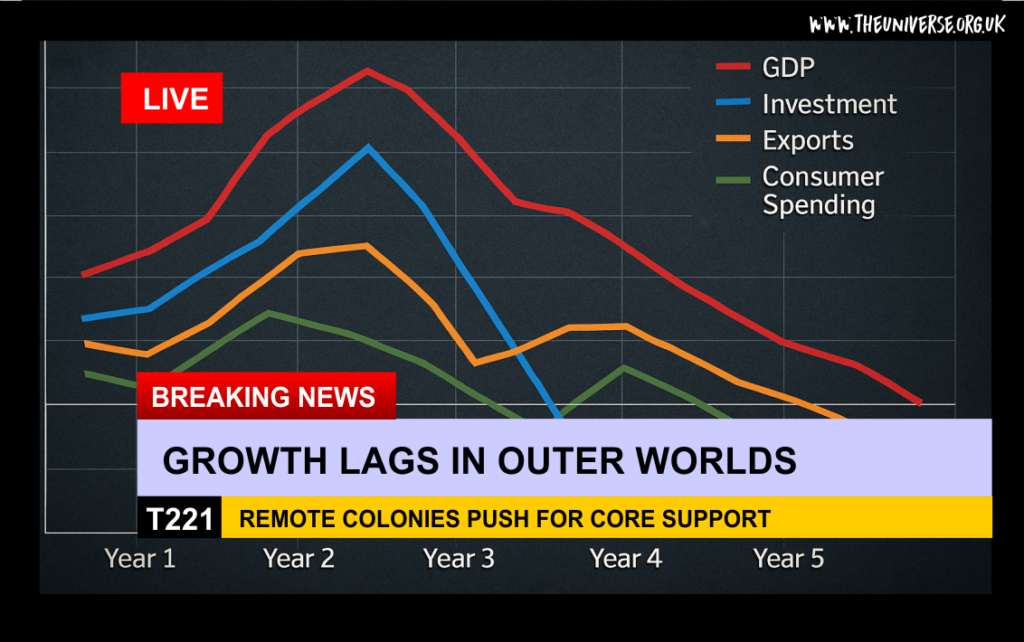
Economic data from Q7 Earth Empire colonies such as Pesayta, Shyling, and Pownd indicate stagnant GDP figures for the past four turns. Despite increased imperial infrastructure spending in 221, these worlds have failed to attract significant private investment. Sectoral officials cite bureaucratic inertia and lack of incentives for off-world capital. In contrast, central systems like Marque and Dyme continue moderate growth. The Office of Planetary Development has pledged a review of colonial economic support structures, but internal documents suggest no immediate interventions are planned.

The Democratic Authority in the West (DATW) on Y17 has concluded only its second election since the civil war, returning President Dagmar Mustar with a decisive landslide.
Turnout was reported to be strong across urban Amicus and the northern safe-zone districts first secured during the conflict. Mustar campaigned on consolidation of the federal arrangement with the NCC, expansion of the integrated healthcare system, and continued stabilisation of security institutions. His Revolutionary Brigades background, once controversial, now appears to have translated into a reputation for order and reconstruction.
Opposition figures accepted the result but voiced concerns over unusual network traffic and targeted messaging during the campaign period. While no evidence of tampering has been substantiated, murmurs of potential interference by unnamed “foreign actors” have circulated in political circles. Electoral supervisors insist procedures were followed in accordance with post-war constitutional safeguards.
The landslide reinforces Mustar’s authority within the DATW and strengthens his hand in ongoing negotiations concerning the Humanity 2.0 enclave. For now, the vote signals continuity rather than upheaval—though suspicions of external influence may linger in the political atmosphere.
