
Interstellar Network News reports that Z130, a fragile independent colony world in Quadrant 7, has been plunged into a major religious and political crisis following a wave of violence that has exposed deep sectarian fault lines
The immediate trigger was a devastating attack on government facilities in the White Advancement Confederacy, officially attributed to extremists linked to Democracy and Freedom Today (DAFT) . However, the aftermath has rapidly taken on a religious dimension. Competing narratives have emerged among Z130’s five major faith communities, with mutual accusations of collaboration, provocation, and heresy fuelling unrest across all three colonial jurisdictions.
Speculation about external interference is now rife. Some local leaders allege covert manipulation by off-world corporate backers seeking to destabilise rival colonial groups. Others point toward neighbouring New Republic worlds, suggesting intelligence agencies may be quietly encouraging sectarian fragmentation to justify future “stabilisation” efforts—claims the New Republic strongly denies.
More outlandish theories are circulating widely. Popular feeds on Z130 claim the violence was engineered by a clandestine Transhumanist cult testing memetic warfare techniques, while one viral rumour insists an ancient orbital relic is subtly altering human belief patterns planet-wide. None of these claims are supported by evidence, but their rapid spread highlights the collapse of trusted information channels.
With local authorities overstretched and faith leaders struggling to contain their followers, analysts warn that Z130 risks sliding from terrorism into sustained religious conflict—regardless of who, if anyone, is pulling the strings from beyond the system.
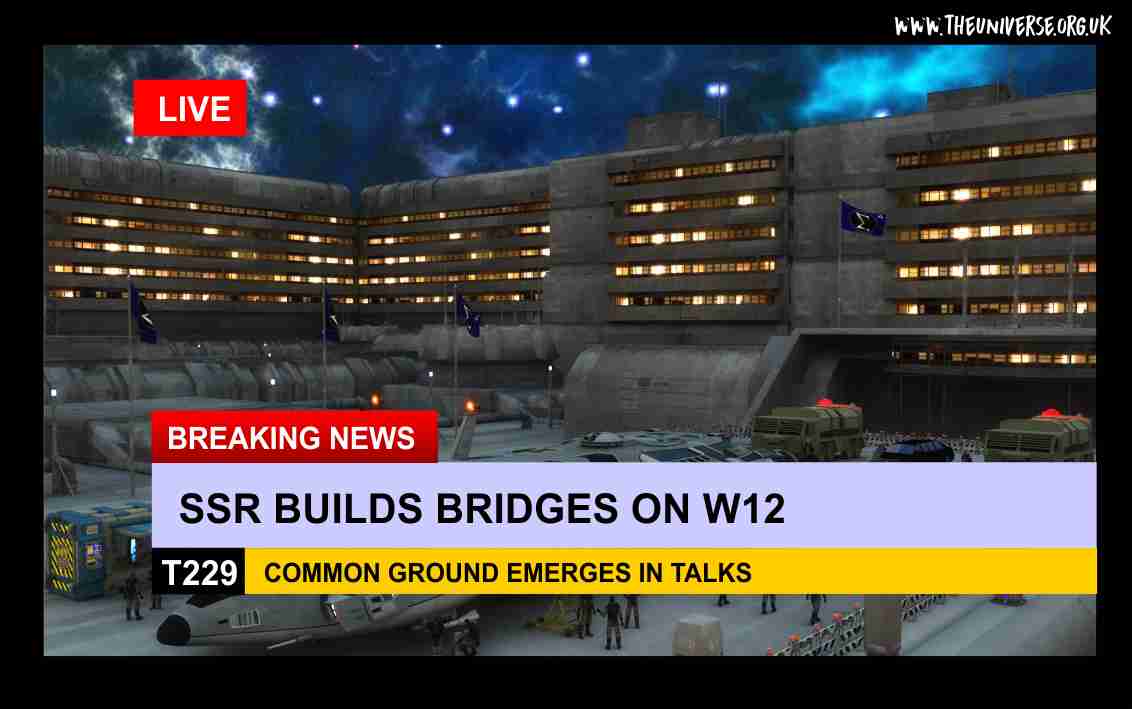
Interstellar Network News reports steady diplomatic progress by the Sirius Socialist Republic on W12, following an extended round of engagement with local authorities.
The SSR diplomatic team has identified a set of shared priorities with W12’s leadership, notably in infrastructure development, healthcare access, and the stabilisation of trade flows. These areas are now forming the basis for deeper technical cooperation and potential follow-on agreements. Officials describe discussions as pragmatic and increasingly detailed, reflecting cautious confidence on both sides.
A parallel assessment examined whether other interstellar polities were actively shaping political outcomes on W12. According to SSR sources, no evidence of external manipulation was identified, easing concerns about competitive influence operations.
Local authorities remain guarded but receptive, privately characterising SSR engagement as a credible and comparatively equitable alternative to partnerships perceived as extractive. While no formal commitments have yet been announced, observers judge the groundwork for sustained cooperation to be firmly in place.

Interstellar Network News reports a further consolidation of stability efforts on W19, following sustained engagement by the Sirius Socialist Republic and its partners.
SSR envoy Hermann Artzat has continued talks with rival factions, reinforcing momentum toward a confederal governance framework that would balance regional autonomy with shared institutions. The diplomatic process has been strengthened by full backing from the Union of Xyon, with the SSR–UOX Joint Diplomatic Mission now widely recognised as the primary mediation channel on the planet.
A key development has been the SSR’s commitment to long-term reconstruction funding, providing sustained financial support to stabilise infrastructure and public services. This assurance has reassured both factions and improved compliance with existing ceasefire arrangements.
While deep political mistrust has not disappeared, observers note that negotiations are shifting from abstract principles to practical implementation details. Analysts assess that conditions for durable stability on W19 have materially improved, though progress remains contingent on continued external support and disciplined mediation.

Interstellar Network News reports a surge of confidence across the Wolf359 Commonwealth following a series of highly effective anti-pirate sweeps by the Wolf359 Royal Navy in Quadrant 7.
Operating under the direct command of Admiral Thorebourne, Royal Navy task groups conducted targeted patrols and rapid-response interdiction operations along key Wolfer trade routes. Acting on actionable intelligence, Wolfer ships moved with speed and confidence, presenting an unmistakable display of naval dominance.
The impact was immediate and decisive. Several suspected pirate vessels dispersed or withdrew entirely from Commonwealth space following visible interdiction activity. Merchant traffic reported a sharp reduction in harassment, and convoy schedules returned to normal within hours.
Fleet officials describe the operation as a textbook application of Wolfer naval doctrine: persistent pressure, aggressive manoeuvre, and absolute control of local space. The sweeps reaffirmed Wolfer resolve and sent an unambiguous message to hostile actors.
Across Wolf359 space, the conclusion is clear. Under Admiral Thorebourne’s command, the Wolfer Royal Navy remains vigilant, professional, and utterly prepared to defend its trade routes and sovereignty.
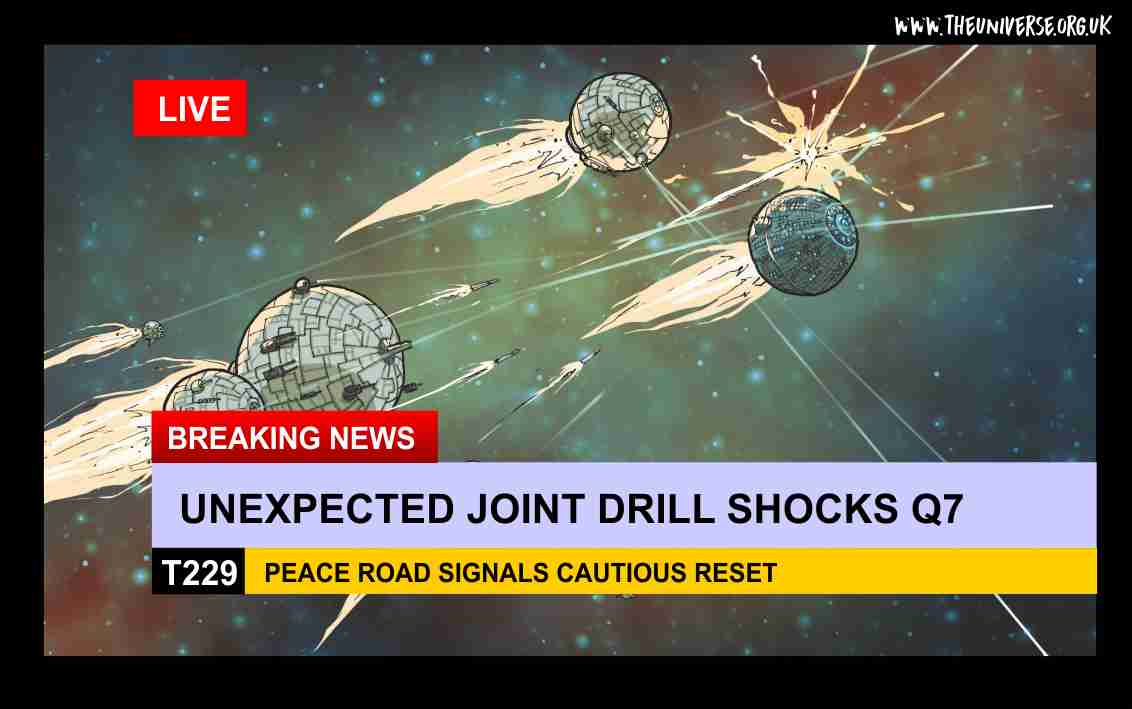
Interstellar Network News can report that the Greater Federation of Asteel and the Sirius Socialist Republic have conducted an unannounced joint military exercise, a development without precedent in recent Quadrant 7 history given decades of strategic suspicion between the two powers.
The exercise, designated PEACE ROAD, took place at the uninhabitable system Star 7-113986 and involved the GFA Battle Fleet Rufus G. Herring operating alongside the SSR 3/4th Shock Squadron. The absence of prior public notification has fuelled intense speculation among analysts, particularly as the manoeuvres occurred against a backdrop of long-standing military posturing and economic rivalry.
According to a rare joint statement issued following the exercise, both sides reported that:
“Exercise PEACE ROAD successfully demonstrated professional conduct, effective communication protocols, and improved deconfliction procedures between participating forces. Joint manoeuvres and combined engagement drills were executed safely and without incident. While differences in scale and doctrine remain, command-level coordination functioned as intended, reducing the risk of miscalculation during future encounters.”
GFA sources privately emphasised the smooth integration of manoeuvre and communications, citing increased confidence in practical cooperation. SSR assessments were more restrained, noting that while operational trust remains limited, the exercise marginally eased tensions and reinforced discipline on both sides.
Strategically, the significance lies less in the tactical outcomes than in the political signal. Conducting a joint drill—however limited—suggests a willingness to test stabilising mechanisms at a time when misinterpretation could prove costly. Observers caution that PEACE ROAD does not resolve underlying disagreements, but it may mark the first deliberate step away from reflexive confrontation toward managed rivalry in Quadrant 7.
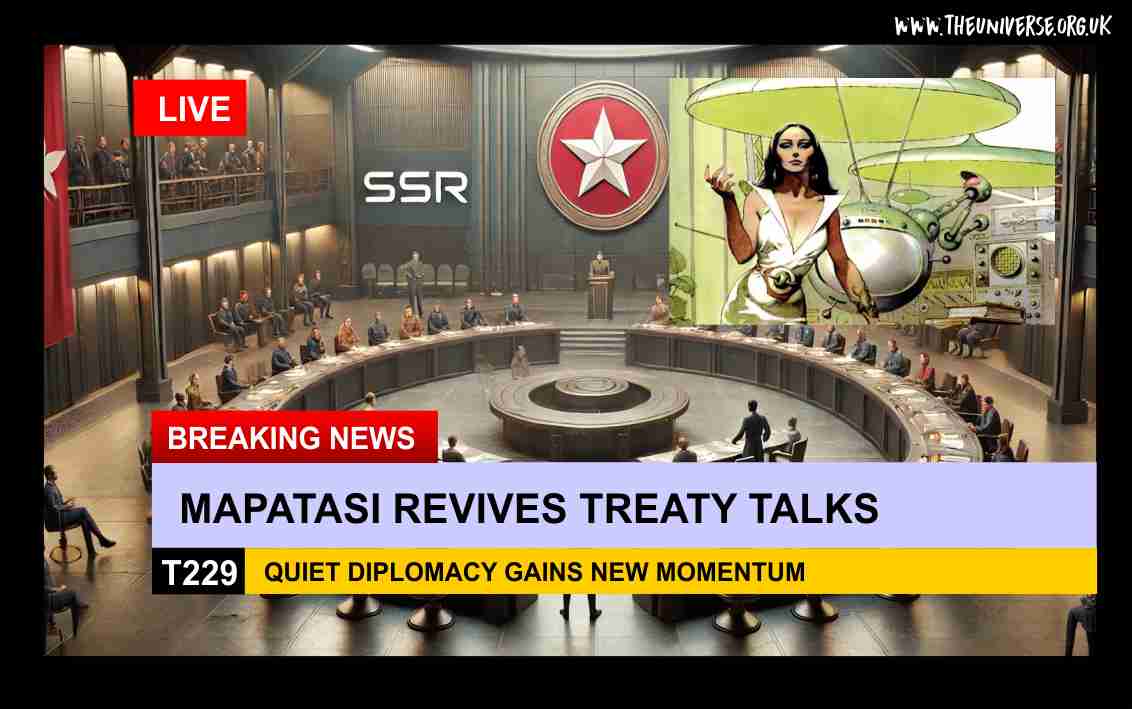
Interstellar Network News reports renewed diplomatic movement between the Greater Federation of Asteel and the Sirius Socialist Republic, following the deployment of Corinne Mapatasi to F-Luent.
Appointed as sherpa for a proposed Treaty of Peace and Friendship, Mapatasi has brought new energy to diplomatic channels that had previously stalled. Widely regarded as a highly effective political fixer, she has impressed SSR intermediaries with a pragmatic, low-profile approach focused on confidence-building rather than public positioning.
Sources close to the talks confirm quiet but substantive progress on draft treaty frameworks, with sensitive issues being addressed incrementally. While no formal announcements are expected in the near term, both sides are signalling cautious optimism.
Analysts note that Mapatasi’s involvement suggests a deliberate effort to lower political temperature and test whether sustained engagement can stabilise the GFA–SSR relationship in Quadrant 7.

Interstellar Network News reports the arrival of Professor Clara P. Dalley on Brburi, marking a significant shift in Greater Federation of Asteel economic engagement with the Sirius Socialist Republic.
Professor Dalley has begun preliminary work on establishing a Steelyard Economic Cooperation Zone, intended to provide a structured framework for GFA–SSR trade, logistics, and industrial collaboration. Early signals from SSR officials suggest cautious but genuine interest, with exploratory discussions already under way.
The move, however, carries wider consequences. Dalley’s departure from Potomax has disrupted the GFA’s flagship Homeworld-class development project, which she had personally overseen for several years. Analysts now expect the programme to slow markedly, with full completion unlikely before Turn 244.
Observers describe the Brburi deployment as a calculated trade-off: sacrificing momentum at home to test whether economic cooperation can ease strategic tensions on the GFA–SSR frontier.
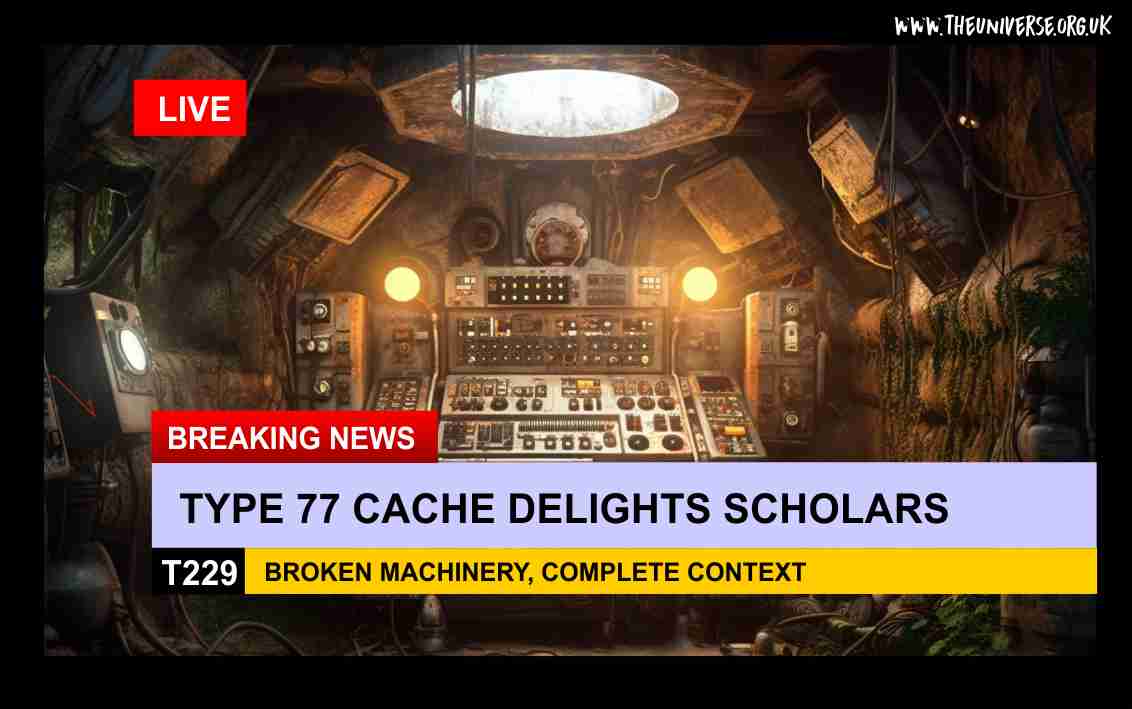
Interstellar Network News is pleased—indeed compelled—to report a development at the Tuskan Dig that has elicited what one senior academic described as “an entirely undignified level of excitement” within specialist circles.
Excavation teams have uncovered a substantial cache of Type 77 Forerunner Broken Machinery, a classification long regarded as intellectually fertile yet chronically underrepresented in situ. While individually non-functional, the assemblage is remarkable for its contextual completeness: articulated fragments, matched failure surfaces, and spatial patterning preserved with minimal post-depositional disturbance .
Preliminary analysis suggests the cache represents neither casual discard nor catastrophic destruction, but a deliberate aggregation of end-of-life components, plausibly linked to maintenance, ritualised decommissioning, or system-level redundancy practices. Scholars are particularly animated by repeated stress motifs across incompatible subsystems, hinting at shared design grammars rather than isolated mechanical failure.
Within the Tuskan corpus—already celebrated for its sequence of “empty” yet conceptually rich finds—Type 77 material is prized precisely because it resists easy narrative closure. As one researcher noted, “It is machinery that refuses to work, but insists on meaning.”
The discovery reinforces Tuskan’s status as a site where absence, residue, and fragmentation repeatedly outperform spectacle as vehicles of understanding. Full typological and microfracture studies are now underway, under IFF protocols, with expectations described—without irony—as profoundly unreasonable .
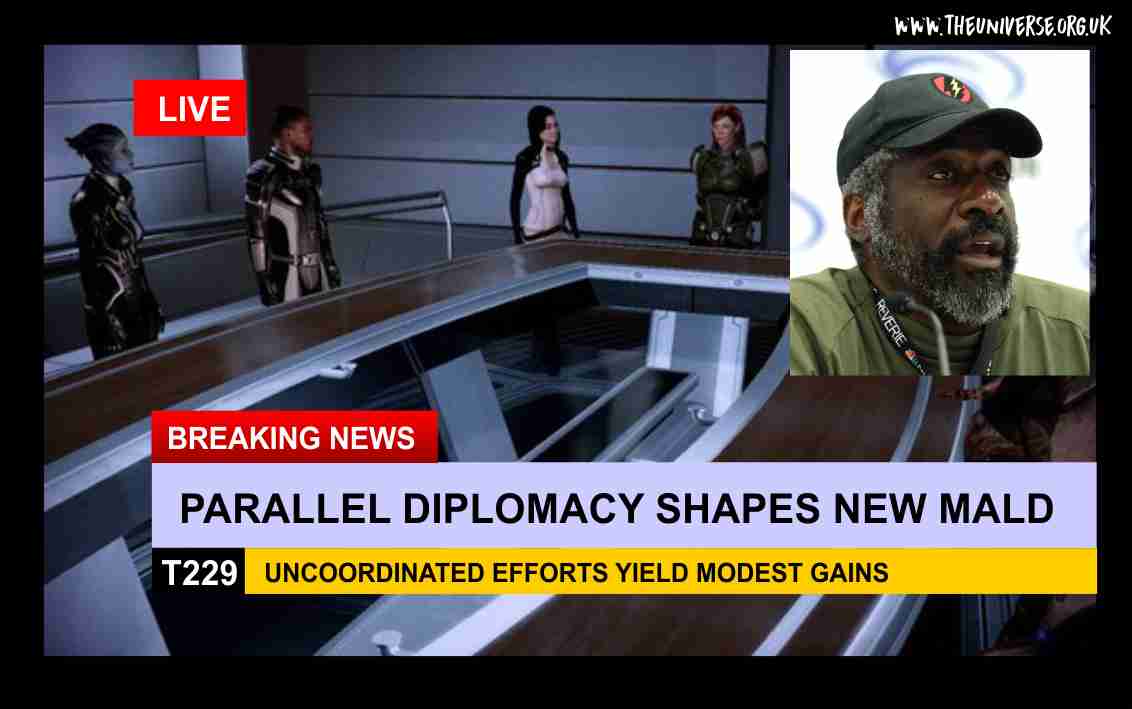
Interstellar Network News reports that New Mald’s civil war has entered a tentative new phase, shaped by parallel but largely uncoordinated diplomatic initiatives led by the New Republic and the Republic of New Venus. While neither effort has produced a comprehensive settlement, together they have contributed to a measurable, if fragile, reduction in tensions.
The New Republic has pursued a deliberately quiet strategy, engaging moderate factions through sustained behind-the-scenes diplomacy. Its credibility, built through visible humanitarian assistance, has enabled diplomats to encourage de-escalation and explore potential power-sharing arrangements without provoking hardline backlash. Sources close to the process report improved communication between previously isolated groups and a gradual normalisation of dialogue, even in districts still affected by sporadic violence.
In parallel, Yael Ronen has led Venerian diplomacy focused on converting short-term ceasefires into sustained local agreements. Several such arrangements are now holding, allowing limited coordination between moderate factions and reducing immediate civilian harm. Although hardliners continue to resist compromise, these agreements have opened space for preliminary discussions on a framework for broader peace talks. Ronen’s ongoing shuttle diplomacy is aimed at consolidating trust and widening participation.
Analysts note that the absence of formal coordination between these initiatives carries risks. Differing approaches, timelines, and interlocutors could generate mixed expectations or allow spoilers to exploit gaps. However, there is also a degree of constructive redundancy: pressure and reassurance are being applied from multiple directions, making it harder for any single faction to dominate the narrative or collapse talks entirely.
Overall, the combined impact has been incremental stabilisation rather than breakthrough. Violence remains endemic, and political authority fragmented. Yet compared to previous cycles of escalation, New Mald now shows signs of diplomatic traction. Whether these parallel efforts converge into a coherent peace process—or stall independently—will shape the next phase of the conflict.

Interstellar Network News reports a highly successful conclusion to EXERCISE TEMPTING SNACK, conducted by the Republic of New Venus on B’Krath, underscoring the Republic’s growing reputation for disciplined, responsive defence operations .
Led by the 7th Naval Landing Division, the exercise tested planetary defence and rapid regional response, with B’Krath operating both as a protected system and a forward staging base. Complex, multi-phase scenarios rehearsed orbit-to-surface landings, integrated system security, and swift force projection to neighbouring systems under simulated crisis conditions.
Commanders reported exceptionally strong performance across logistics, planning, and execution, with units demonstrating speed, precision, and cohesion throughout. Observers noted particularly effective coordination during high-tempo transitions, reinforcing confidence in the division’s operational readiness.
Venerian defence officials described TEMPTING SNACK as a clear demonstration of preparedness and professionalism, signalling the Republic’s ability to respond decisively to emerging threats in Quadrant 7.
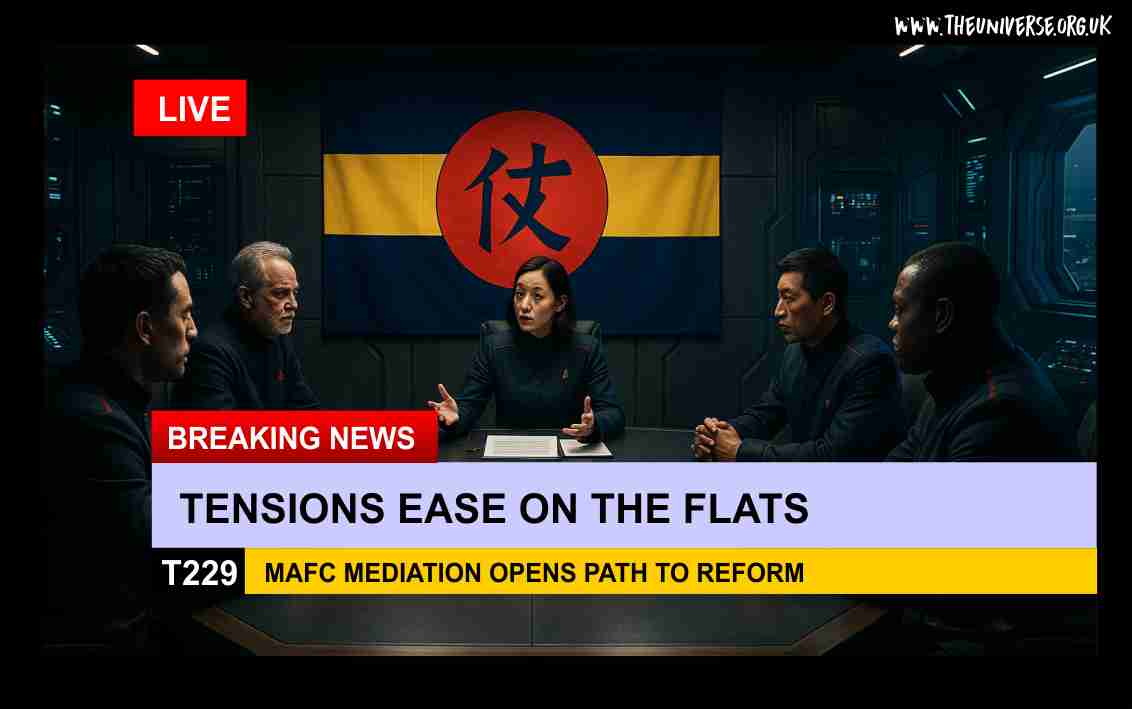
Interstellar Network News reports a measured stabilisation of the situation on The Flats, following sustained diplomatic engagement by the Martian Association of Free Colonies (MAFC) and a reduction in confrontations on the streets .
After weeks of mass demonstrations and sporadic violence, MAFC diplomats have continued a mediation process between the Holy Exploration Confederation government and opposition groups demanding expanded democratic participation. Talks, initially marked by deep mistrust, have now produced agreement on preliminary principles for reform and independent oversight, easing immediate political pressure.
In parallel, Martian Star Navy (MSN) personnel have maintained discreet assistance to civil authorities, deliberately low-profile and focused on reassurance rather than enforcement. MAFC officials privately reiterated concerns that earlier security responses had been overly heavy-handed, stressing that long-term stability depends on consent rather than coercion.
While no final settlement has been reached, protest activity has declined and arrests have slowed. Observers describe the MAFC role as neutral and constructive, helping restore confidence on one of the MAFC’s most economically successful worlds .
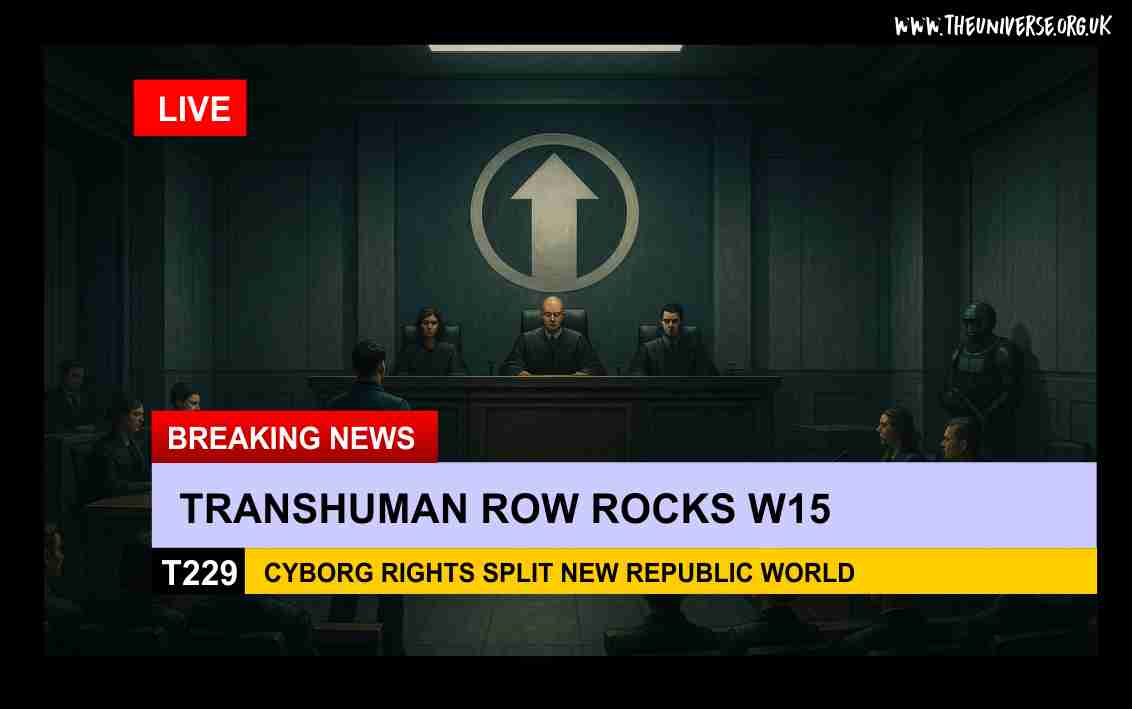
Interstellar Network News reports a growing internal political crisis on W15, a New Republic colony world in Quadrant 7, following escalating disputes over the status and rights of Transhuman citizens .
The crisis centres on proposals within W15’s ruling National Successful Coalition to impose tighter regulation on cyborg modification clinics and enhanced individuals, citing public safety and mental health concerns. Transhuman advocacy groups, led locally by activists aligned with the Transhumanist Front, have condemned the measures as discriminatory and politically motivated .
Demonstrations in several urban centres have drawn thousands, with protesters rejecting the term “cyborg” and demanding formal recognition as Transhumans. Tensions have been heightened by reports linking extensive cybernetic modification to increased psychological instability, a claim campaigners argue is exaggerated to justify exclusionary policy .
The dispute has wider implications for the New Republic, which hosts one of the largest Transhuman populations in human space and includes the Transhumanist Liberation Party within its governing coalitions . Analysts warn that how W15 resolves the crisis may set a precedent for Transhuman policy across the Republic.
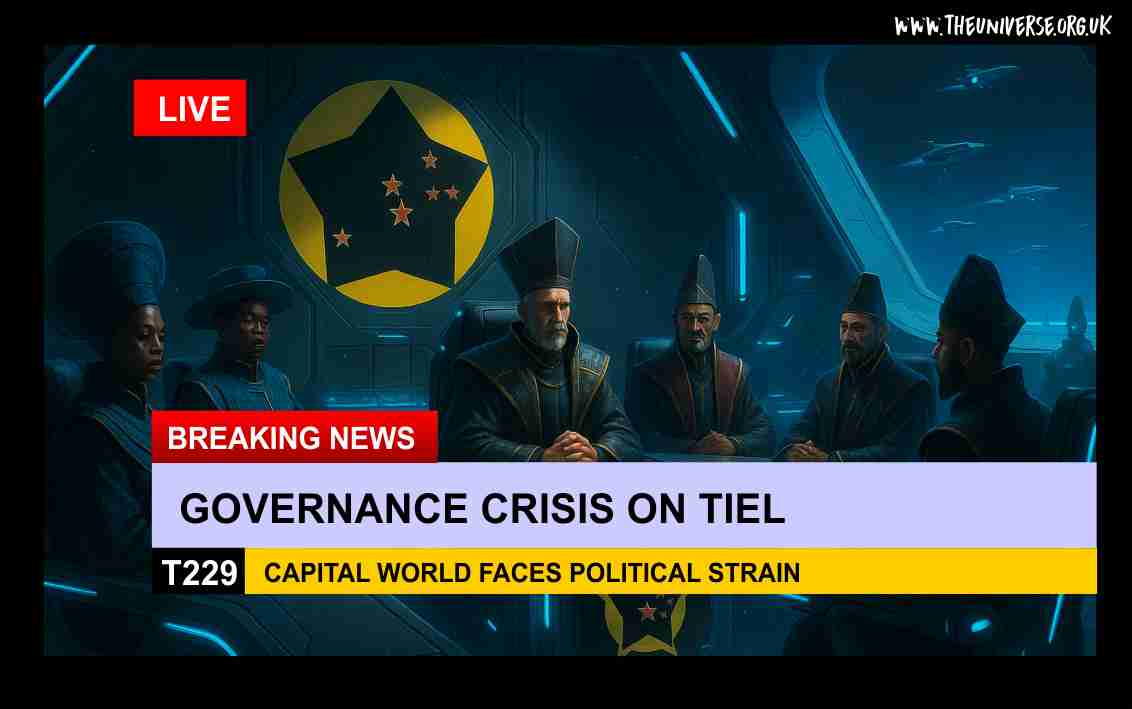
Interstellar Network News reports a growing local government crisis on Tiel, the capital world of the Union of Xyon (UOX) in Quadrant 7, as long-simmering political, religious, and governance tensions converge into open institutional strain .
The immediate trigger has been renewed deadlock within Tiel’s planetary administration over regulatory authority, secular–clerical boundaries, and the scope of regional autonomy. Disputes between elected officials and religious authorities—previously contained—have intensified following unresolved arguments over environmental enforcement and education standards. Statements from the High Ecclesiastical Council calling for doctrinal consistency have been met with firm resistance from civic leaders, who argue that Tiel’s role as a progressive administrative hub demands modernised governance.
These tensions sit atop a volatile recent history. Controversies over state-funded genesplicing, allegations of religious discrimination, and earlier orbital safety failures have eroded public confidence in institutional competence. While Tiel retains a high standard of living and strong civic culture, opposition parties are increasingly framing the crisis as evidence of systemic stagnation rather than isolated disputes.
UOX central authorities have so far avoided direct intervention, emphasising Tiel’s constitutional autonomy. However, with Quadrant 7 elections approaching and reformist movements gaining traction across UOX worlds, analysts warn that failure to stabilise governance on Tiel risks symbolic damage far beyond the planet itself.
As the Union’s political heart, Tiel’s ability—or inability—to resolve its crisis may shape confidence in UOX governance across the quadrant.
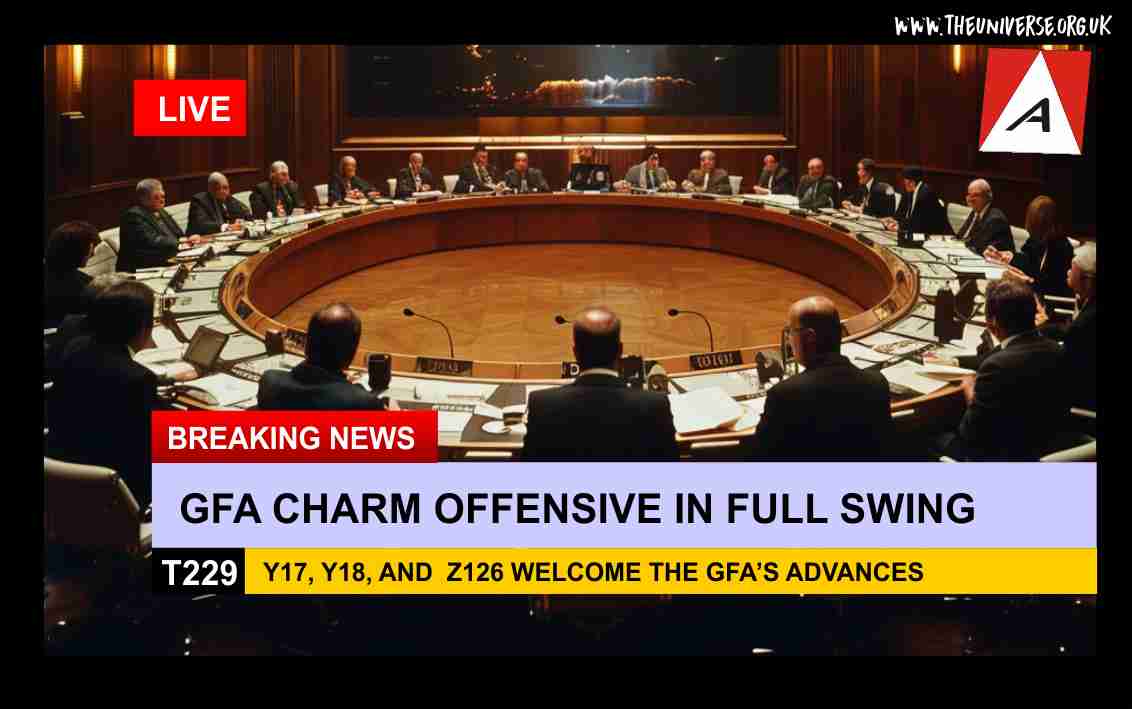
A major diplomatic and political campaign by the Greater Federation of Asteel (GFA) has triggered a wave of pro-Esteeler sentiment across three strategically located independent worlds: Y17, Y18, and Z126.
On Y17, GFA outreach efforts have secured growing support from key factions within the Sunshine Colony and corporate blocs, opening access to regional planning bodies and economic forums. Local leaders are reportedly receptive to deeper engagement, particularly in trade, infrastructure, and security cooperation.
On Y18, several colonial governments have begun discussing potential referenda on future political alignment. Influential investors such as Sanctuary Clinics and Hat Yay Sirukit are understood to favour closer ties with the Federation, citing shared economic goals and access to development expertise.
Though still emerging, Z126 has seen the formation of an Esteeler-aligned civic movement, advocating for future cooperation and policy alignment. Local observers note a noticeable shift in public discourse towards the benefits of GFA affiliation.
Analysts describe the campaign as a measured but highly effective example of diplomatic statecraft. With groundwork now in place, formal membership initiatives may soon follow. Esteeler influence in Quadrant 7 continues to grow.
